Best 640 Thermal Scope
Last updated: February 26, 2026
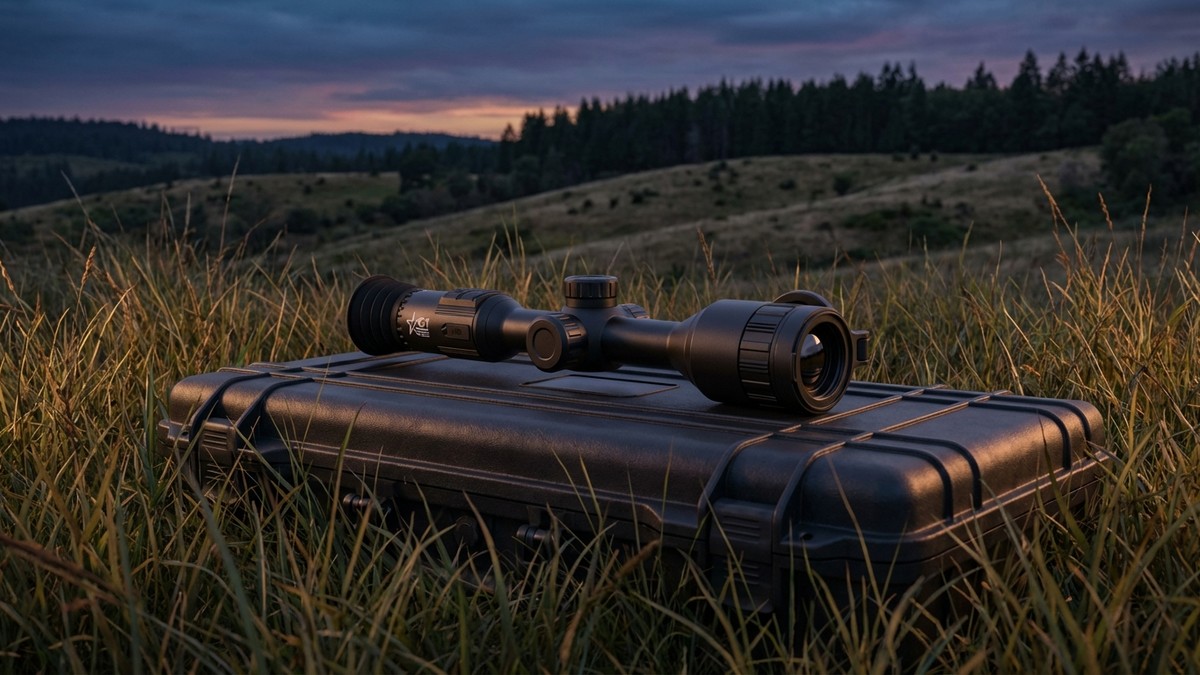
A 640-core thermal scope isn’t a marketing tier — it’s a fundamentally different image quality level. The 640×512 sensor array resolves 2.78 times as many pixels as a 384×288, and that difference is visible at every range past 200 yards. Animals that appear as warm blobs at distance on a 384-core scope resolve as distinct body shapes — posture, movement, species detail — on a 640. Shots that require target identification at 700+ yards before committing are cases where 640-core sensors earn the price. This guide covers the best 640-core thermal scopes available, what the resolution jump actually delivers in the field, and how to decide whether it’s worth the spend over a strong 384-core option.
If you’re still evaluating whether to commit to the 640 price tier versus maximizing value in the 384-core market, the comparison in the under-$3,000 guide is a useful starting point: best thermal scope under $3,000 — where the 384-core market tops out.
Quick picks
AGM Rattler V2 TS35-640
The entry point for 640-core performance at $3,295. Compact platform, 35mm lens, detection at 1,400+ yards. The strongest value at the low end of the 640 tier for predator and hog hunters.
$3,295
Pulsar Thermion 2 XP50 Pro
Pulsar’s 640-core flagship. 50mm lens, 1,800+ yard detection, onboard video recording, LRF integration. The benchmark for hunting thermal image quality in the $3,000–$4,000 range.
$3,799
AGM Adder V2 50-640
640-core sensor behind a 50mm lens. Detection exceeds 1,800 yards. When maximum identification range is the primary requirement — long-range hog control, open-country predator calling, or Texas-scale properties.
$4,495
Why 640 resolution matters — and when it doesn’t
The pixel count gap between 384×288 and 640×512 is large enough that it shows up in actual field use, not just on a spec chart. With a 384-core sensor at 500 yards, a coyote-sized animal reads as a warm heat mass with recognizable body outline. With a 640-core sensor at the same range, the same animal shows individual leg movement, head position, tail — the kind of detail that helps you read the animal’s behavior before committing. That difference matters most in two scenarios: when you’re deciding whether to shoot (species ID, behavior assessment) and when you’re shooting at extended range where precise reticle placement requires you to clearly see the target’s vital zone.
The 640-core sensor also performs better in marginal thermal contrast conditions. When ambient and animal temperature differential narrows — warm evenings in early season, wet conditions, moderate fog — a 640-core image retains more useful contrast than a 384-core image at the same range. The higher pixel count captures more thermal gradient data, which translates to more visual separation between target and background when the gap is small. This isn’t a dramatic difference in ideal conditions, but in the field on a warm night where contrast is narrow, it can be the difference between a clear target image and an ambiguous one.
At ranges past 600 yards, the 640-core sensor is unambiguously better than 384 for identification. Detection range extends further on 640-core scopes, but more relevantly, the quality of the image at 600–900 yards is categorically different. A 384×288 sensor at 600 yards shows a heat signature that’s identifiable as an animal — a 640×512 sensor at the same range shows a heat signature where you can assess body size, gait, and behavior. For predator hunters calling at long range, or hog control shooters on open pasture, that identification quality has direct operational value.
When the 640-core premium isn’t worth it: inside 400 yards in close terrain, with animals that don’t require fine identification detail, or when budget constraint makes a strong 384-core option a more complete tool for the money. A 384-core scope at $2,200 that fits the rifle, holds zero, and covers the hunting distances is a better investment than a 640-core scope that strains the budget and forces trade-offs on other gear. The 640 earns its place when the hunting scenario genuinely uses what it offers.
For more context on how 640-core compares to the 384 market at similar prices, see: best thermal scope for coyote hunting — 384 vs 640 for open-terrain predator work.
Comparison — all 640-core products
| Product | Sensor | Lens | Detection range | Price | Link |
|---|---|---|---|---|---|
| AGM Rattler V2 TS35-640 Best Overall | 640×512, 12µm | 35mm | ~1,400 yd | $3,295 | Check price |
| Pulsar Thermion 2 XP50 Pro Best Image | 640×480, 17µm | 50mm | ~1,800 yd | $3,799 | Check price |
| Pulsar Talion XG35 | 640×480, 12µm | 35mm | ~1,400 yd | $3,999 | Check price |
| InfiRay RICO RH50 | 640×512, 12µm | 50mm | ~1,700 yd | $4,299 | Check price |
| AGM Rattler V2 TS50-640 | 640×512, 12µm | 50mm | ~1,750 yd | $3,695 | Check price |
| AGM Adder V2 50-640 Best Reach | 640×512, 12µm | 50mm | ~1,800 yd | $4,495 | Check price |
| Trijicon IR-HUNTER MK3 | 640×480, 12µm | 35mm / 60mm | ~1,400–2,000 yd | $7,999 | Check price |
Detailed reviews
AGM Rattler V2 TS35-640 — best 640 thermal scope overall
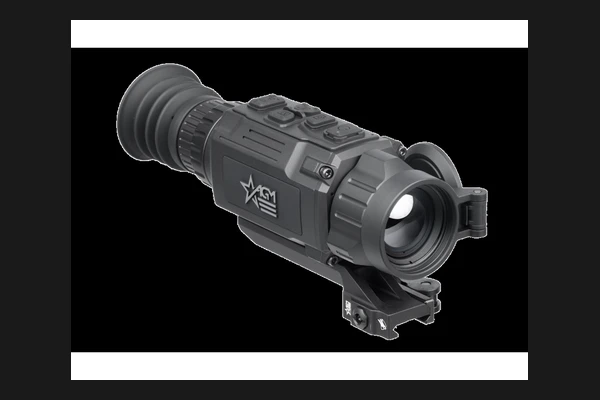
The Rattler V2 TS35-640 is the entry point into 640-core thermal at a price that’s aggressive for the sensor class. The 640×512 LWIR sensor with 12-micron pixel pitch in the compact Rattler V2 platform gives you full 640 resolution in a scope that weighs under 1.1 lbs and mounts in standard 30mm rings. The 35mm germanium lens puts detection range at approximately 1,400 yards on human-sized targets, with identification range on coyote-sized game extending clearly to 600–700 yards — a meaningful improvement over 384-core scopes at that range.
Base magnification is 3.5x with digital zoom to 14x. The 7x setting holds useful resolution for identification and shot placement. The reticle comes in multiple styles and holds zero reliably through .308 and comparable recoil. Field of view at 3.5x is sufficient for tracking moving predators inside 200 yards; the 35mm lens is a sensible choice for mixed hunting where you’re calling coyotes at range and also running hogs through fields. For hunters who want 640-core performance without paying $4,000+, the TS35-640 at $3,295 is the most direct answer.
Pulsar Thermion 2 XP50 Pro — best image quality in the 640 class

The Thermion 2 XP50 Pro runs a 640×480 sensor at 17-micron pixel pitch behind a 50mm lens. The 17-micron pixel size captures more IR energy per pixel compared to 12-micron sensors — the result is a richer, more contrast-rich image that handles marginal thermal conditions better and produces a more refined picture at the same detection distances. Pulsar’s image processing adds to this: the Thermion 2 Pro series uses improved processing algorithms that reduce noise and sharpen edges compared to earlier generations. Detection range is approximately 1,800 yards on human-sized targets.
The Thermion 2 XP50 Pro includes a built-in video recorder, Stream Vision 2 app compatibility for streaming and control, a picture-in-picture mode, and integration with Pulsar’s LRF-B accessory rangefinder. The interface is clean and fast — Pulsar has refined it across multiple product generations. Zero hold is excellent, consistent across temperature cycles and recoil from standard hunting calibers. At $3,799, the Thermion 2 XP50 Pro is the reference point for 640-core image quality in the $3,000–$4,000 bracket. If image quality and video documentation are the primary requirements, this is where the market currently puts its ceiling before you get into Trijicon pricing.
Pulsar Talion XG35 — compact 640 with Pulsar image quality
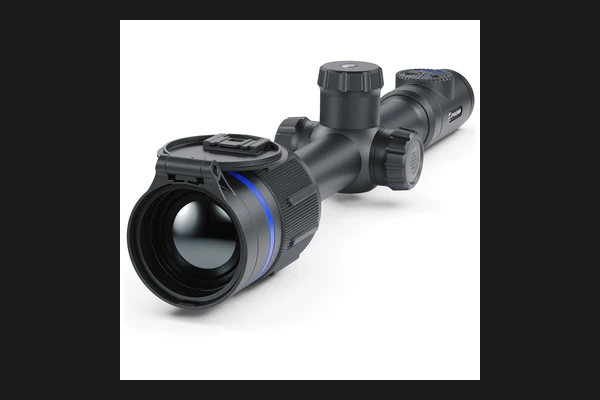
The Talion XG35 uses a 640×480 12-micron sensor behind a 35mm lens in Pulsar’s Talion platform — a slightly more compact and lightweight form factor than the Thermion 2. Detection range is approximately 1,400 yards on human-sized targets, equivalent to the AGM Rattler V2 TS35-640. The Pulsar processing and build quality differentiates it from the AGM at the same detection spec. The Stream Vision 2 app integration, onboard recording, and Pulsar’s refined image processing bring the same ecosystem advantages as the Thermion 2 XP50 Pro at a shorter focal length and wider FOV.
At $3,999, the Talion XG35 is more expensive than the AGM Rattler V2 TS35-640 by $704 for similar detection range. What you’re paying for is Pulsar’s image processing quality, the more refined software ecosystem, and the Talion’s weight advantage (roughly 0.9 lbs vs 1.1 lbs for the Rattler V2 TS35-640). For hunters who prioritize the Pulsar image quality in a compact form factor without moving to the 50mm Thermion 2 XP50 Pro, the Talion XG35 fills that slot. For hunters who want the lowest price into 640-core performance, the AGM Rattler V2 TS35-640 delivers the same detection numbers at $700 less.
InfiRay RICO RH50 — 640-core 50mm option at competitive pricing

The RICO RH50 runs a 640×512 12-micron sensor behind a 50mm lens. Detection range reaches approximately 1,700 yards on human-sized targets. InfiRay manufactures LWIR sensor cores used in products across the civilian thermal market; the RICO RH50’s sensor is the same 640×512 12-micron array used in other 640-class scopes in this price range. The software platform — RICO’s proprietary interface — is less refined than Pulsar’s Stream Vision system but covers core thermal scope functions without significant limitation.
At $4,299, the RICO RH50 sits above the AGM Adder V2 50-640 ($4,495) in one reading and below it in another depending on retailer and sale pricing — these two are effectively equivalent in price tier. The AGM has the advantage of US support infrastructure and established brand recognition in the hunting market. InfiRay has a growing US presence. The performance comparison at this resolution and lens length is close enough that brand preference and warranty service accessibility may drive the decision as much as spec comparison.
AGM Rattler V2 TS50-640 — 50mm reach in the Rattler platform

The Rattler V2 TS50-640 takes the same 640×512 12-micron sensor as the TS35-640 and moves it behind a 50mm germanium lens. Detection range extends to approximately 1,750 yards on human-sized targets — a real improvement over the 35mm version at the cost of narrower FOV and higher base magnification. For open-terrain hunting where the primary use is long-range predator calling or hog management across large pasture, the additional reach is valuable. For tighter terrain or mixed hunting where close-range shots are part of the picture, the 35mm’s wider FOV is more practical.
At $3,695, the TS50-640 is $400 more than the TS35-640 and delivers the 50mm lens reach in the same compact platform. The Rattler V2 form factor keeps weight under 1.2 lbs even with the 50mm optic — lighter than comparable 50mm thermal scopes from other manufacturers. For hunters who want maximum reach from the AGM 640-core platform without moving to the larger Adder V2 50-640 tube design, the Rattler V2 TS50-640 hits that specific requirement well.
AGM Adder V2 50-640 — maximum-reach 640-core scope
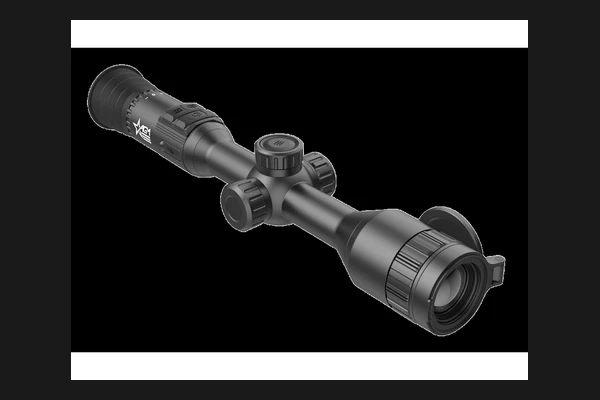
The Adder V2 50-640 pairs the 640×512 12-micron sensor with a 50mm lens in the traditional tube platform — 30mm tube body, longer overall length than the Rattler V2, mounts in standard 30mm rings. Detection range at approximately 1,800 yards on human-sized targets is among the highest in this sensor class. Identification on coyote-sized game extends to 900–1,000 yards in good thermal contrast conditions — a range at which 384-core scopes show a heat shape rather than a recognizable animal.
At $4,495, the Adder V2 50-640 is the highest-price AGM product in this guide. It earns that position for ranchers and hunters operating at long range across open terrain where the 50mm 640-core combination provides detection and identification capability that no 384-core scope matches. For most hunters whose shots stay inside 600 yards, the AGM Rattler V2 TS35-640 at $3,295 is sufficient. The Adder V2 50-640 is the right tool when 900–1,000 yard identification is a genuine operating requirement.
Trijicon IR-HUNTER MK3 — military-derived 640 at the top of the market
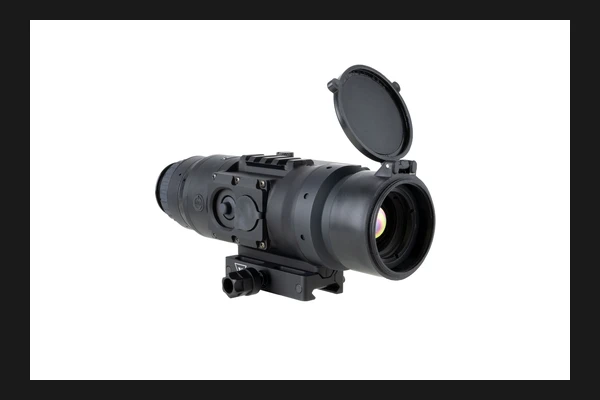
The IR-HUNTER MK3 uses a 640×480 12-micron LWIR sensor with Trijicon’s in-house processing derived from military contract development. Available in 35mm and 60mm objective configurations; the 60mm version produces detection past 2,000 yards on human-sized targets. The build quality is at a different tier from hunting-market thermal scopes — mil-spec materials, extreme temperature tolerance (-40°F to 140°F), shock resistance rated for heavy recoil platforms including .50 BMG. Zero holds through conditions that would challenge other scopes in this list.
At $7,999, the IR-HUNTER MK3 is not a hunting scope purchase for most hunters — it’s a professional or serious enthusiast tool where the cost difference is justified by the build requirements, the warranty support, and the performance in extreme conditions. The thermal image is excellent, the processing handles marginal contrast conditions well, and the scope performs at specifications across temperature extremes that civilian thermal scopes handle less consistently. For hunters whose requirements don’t include mil-spec durability or extreme-cold operation, the Pulsar Thermion 2 XP50 Pro or AGM Adder V2 50-640 deliver competitive thermal performance at $4,000–$4,500 less.
How to choose a 640-core thermal scope
The first question to answer honestly: do the hunting scenarios you actually face require what a 640-core sensor specifically delivers? The improvement over 384-core is real, but it shows up most clearly at ranges past 500 yards and in marginal thermal contrast conditions. If your hunting is primarily inside 400 yards in dense terrain — Texas hill country, brush hunting, close-range feeders — a 384-core scope at $2,000–$2,500 may be the more complete tool for the money.
Within the 640 class, the lens focal length is the main spec decision. A 35mm lens gives you a wider field of view — better for tracking moving predators, more situational awareness in dynamic hunting situations. A 50mm lens gives you substantially more reach — better for open terrain where animals appear at known distances past 700 yards. The AGM Rattler V2 TS35-640 at $3,295 is the 35mm entry point; the AGM Rattler V2 TS50-640 at $3,695 is the same sensor with a 50mm lens for $400 more. Both are strong options — choose based on whether your hunting is at 300–600 yard medium range or 600–1,000+ yard long range.
Pulsar vs. AGM in the 640 class comes down to what you’re paying for beyond the sensor. AGM delivers excellent 640-core performance at the lowest available prices in the class ($3,295–$4,495). Pulsar delivers refined image processing, a mature software ecosystem with Stream Vision 2, and the brand consistency of a company that has been a leading thermal manufacturer for over a decade. The Pulsar Thermion 2 XP50 Pro at $3,799 costs $504 more than the AGM Rattler V2 TS50-640 for similar detection range — that gap buys Pulsar’s image processing quality, onboard video, and software refinement. If those matter to how you hunt and document hunts, the premium is justified. If raw detection performance is the metric and price matters, AGM closes the gap substantially.
The Trijicon IR-HUNTER MK3 at $7,999 serves a specific buyer who needs mil-spec build quality and extreme operational tolerance beyond what civilian hunting scopes deliver. For most hunters, the $4,000–$4,500 savings that come from choosing a Pulsar or AGM 640-core option are better applied to other parts of the hunting setup.
Frequently asked questions
Is 640 really that much better than 384 for hunting?
At ranges inside 400 yards, the visible difference is real but may not change hunting outcomes significantly — both sensors detect and identify animals at those ranges reliably. Past 500 yards, the 640-core advantage is meaningful: cleaner identification, better contrast in marginal conditions, and more confident shot placement on the vital zone. For predator hunters calling across open fields or hog control operators on large ranches where shots regularly run 500–800 yards, the 640-core performance difference directly improves hunting effectiveness. For close-terrain hunters inside 400 yards, it’s improvement over an already capable tool.
What’s the difference between 640×512 and 640×480 sensor formats?
Both are commonly marketed as “640-core.” The 640×512 format (used by AGM, InfiRay, and others) has 327,680 total pixels. The 640×480 format (used by Pulsar’s Thermion 2 series and the Trijicon IR-HUNTER) has 307,200 total pixels — about 6% fewer. The difference in image quality between these two formats at 12-micron pixel pitch is minimal and unlikely to be visible in field use. Pixel pitch and sensor quality (NETD, sensitivity) matter more than the 512 vs. 480 row count difference.
How much detection range do I actually gain going from 384 to 640?
With the same lens focal length, a 640-core sensor extends detection range approximately 30–40% over a 384-core sensor on the same target. A 384×288 12-micron sensor with a 35mm lens detects deer-sized targets at roughly 900–1,000 yards. A 640×512 12-micron sensor with the same 35mm lens detects at roughly 1,300–1,400 yards. The more significant gain is in identification range — the distance at which you can confirm species and body detail. That advantage is proportionally larger than the detection range gain because higher pixel count resolves more detail per degree of field of view.
Does a 50mm lens on a 640-core scope create a very narrow field of view?
Yes — a 640×512 12-micron sensor with a 50mm lens produces approximately 12.4 x 9.9 degrees of field of view at 1x, which is narrower than shorter lens alternatives. In practical terms, at 3x magnification you’re seeing roughly 4 degrees of horizontal FOV. For hunting from a fixed position where targets appear in a known sector at long range, this is workable. For fast-moving predator hunting where animals appear unexpectedly from different directions, the narrower FOV of a 50mm lens makes target acquisition harder. The 35mm lens is the more versatile choice for most hunting use; the 50mm earns its place when maximum reach is the overriding priority.
Is the Trijicon IR-HUNTER MK3 worth $8,000?
For most hunters, no — the performance advantage over a Pulsar Thermion 2 XP50 Pro or AGM Adder V2 50-640 does not justify a $4,000–$4,500 price premium for typical hunting use. The IR-HUNTER MK3’s value proposition is in military-derived build quality, operational tolerance at temperature extremes, and a durability rating that exceeds civilian thermal scopes. For professional operators, guides running high-frequency use, or hunters in extremely demanding environments — very cold, high-humidity, heavy-recoil platforms — the build quality argument has merit. For most North American hunting applications in standard conditions, the $3,800–$4,500 scopes in this guide deliver the thermal performance you need without the cost premium.
Final recommendation
For most hunters entering the 640-core class, the AGM Rattler V2 TS35-640 at $3,295 is the right starting point. It delivers full 640×512 sensor performance in a proven compact platform at the lowest price in the class. Detection at 1,400 yards, identification at 700 yards, 35mm FOV for versatile hunting use. If the hunting scenario is primarily inside 600 yards in varied terrain, this scope delivers 640-core performance without overspending on reach you won’t use.
For hunters who hunt primarily across open terrain where shots and identifications run 600–900+ yards, the AGM Rattler V2 TS50-640 at $3,695 or the AGM Adder V2 50-640 at $4,495 add the 50mm lens reach that translates directly to longer identification ranges. The Rattler V2 TS50-640 is the compact option in the 50mm tier; the Adder V2 50-640 is the larger-tube traditional design with equivalent or slightly extended detection. Choose based on form factor preference and the tube design you’re mounting.
For hunters who want the best image quality available under $4,000 and value Pulsar’s software ecosystem and video recording, the Pulsar Thermion 2 XP50 Pro at $3,799 is the reference pick. The 17-micron sensor and Pulsar processing deliver the best image quality in this bracket. If you’re documenting hunts on video or need the Stream Vision 2 integration, it earns its place at that price.
Affiliate disclosure: This page contains affiliate links. If you purchase through an AGM Global Vision link on this page, USA Night Vision may earn a commission at no additional cost to you. Competitor product links use href=”#” placeholders and do not earn commissions. All product recommendations are based on research and editorial judgment. See our full affiliate disclosure policy.