Best Thermal Scope Under $1500
Last updated: February 26, 2026
The $1,000–$1,500 bracket is where thermal scope shopping gets genuinely interesting. Below $1,000, you’re working with 256-core sensors and 19mm or 25mm lenses — capable tools, but limited at distance. Above $1,500, you’re entering territory that demands a more serious budget commitment. The scopes in this bracket represent the first tier where 384-core sensors start appearing at accessible prices, where detection ranges push reliably past 600 yards, and where build quality makes a step up from the entry-level competition. This guide covers that specific window — $1,000 to $1,500 — without padding the list with cheaper models covered elsewhere.
If you’ve already read through the sub-$1,000 options and are deciding whether to stretch the budget, this page answers that question directly: best thermal scope under $1,000 — what the under-1K bracket actually delivers. For the next step up past $1,500, see the breakdown of the mid-tier market: best thermal scope under $2,000 — where to spend for serious capability.
Quick picks
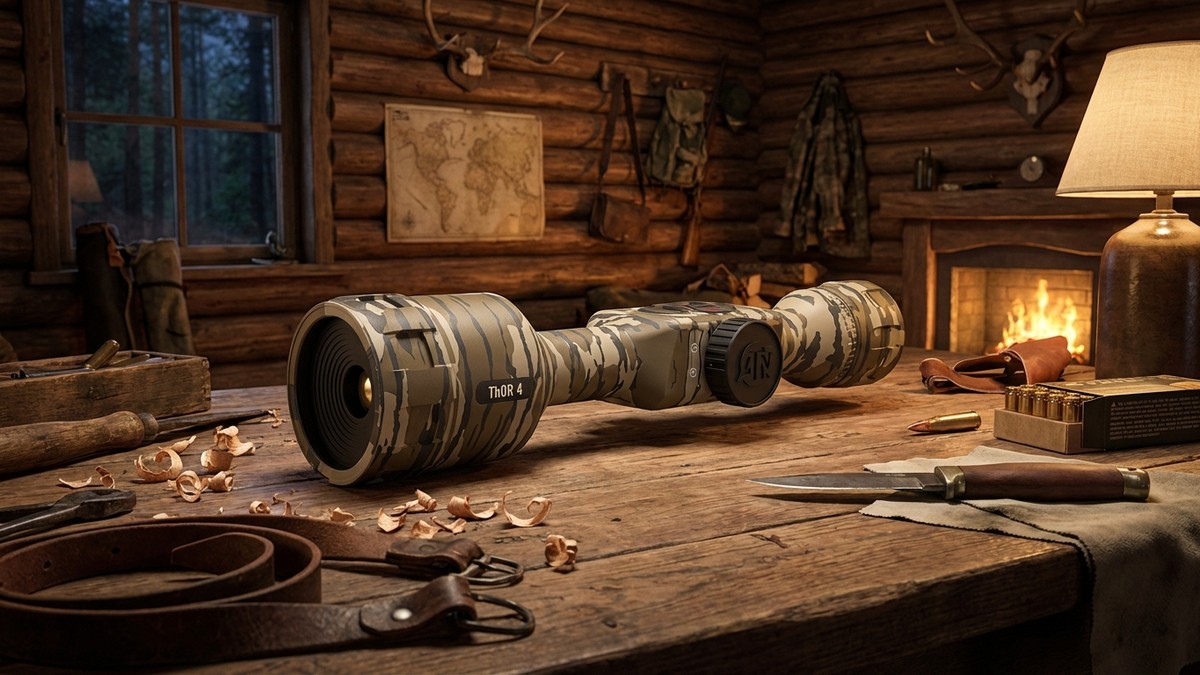
ATN ThOR 4 384 2-8x
384-core sensor, 2–8x magnification range, integrated ballistic calculator. Detection holds to 750+ yards in good thermal conditions. Smart feature set without the ThOR 5 price premium.
~$1,299
Pulsar Thermion XQ30F
Pulsar sensor quality in a traditional riflescope format. 384-core, 17mm lens, clean image reproduction at range. For hunters who prioritize picture quality over smart features.
~$1,399
AGM Rattler V2 TS35-384
AGM’s 384-core sensor in the proven Rattler V2 platform. 35mm lens pushes detection to 900+ yards. At ~$1,495, it’s the highest-capability option at the top of this bracket.
~$1,495
Why the $1,000–$1,500 bracket matters
The jump from 256-core to 384-core sensor resolution isn’t academic — it’s visible in the field. At 400 yards with a 256-core sensor, a deer-sized animal is detectable and identifiable. With a 384-core sensor, that clarity extends meaningfully further, and the image remains sharper in marginal thermal contrast conditions — early morning warmth, fog edge, partial cloud cover. The pixel count jump from 256×192 to 384×288 represents a 2.25x increase in total pixels, which translates directly to image detail at range.
Most hunters reaching for a thermal in this bracket are making a deliberate decision: they’ve priced the entry options, found them adequate for some scenarios but limiting at distance or in tighter thermal contrast conditions, and want a sensor that doesn’t force compromise. The 384-core options in the $1,000–$1,500 range deliver that without doubling the budget.
Lens focal length also matters within this bracket. A 17mm lens on a 384-core sensor gives a wide field of view suited for close-to-medium range work with good situational awareness. A 35mm lens on the same sensor trades FOV for reach — detection extending past 800 yards in favorable conditions. Both are correct tools for different hunting scenarios. Understanding which one matches your primary use is more useful than comparing raw spec numbers.
Battery life, build quality, and user interface all improve meaningfully over the entry-level thermal options. The Pulsar and ATN products in this bracket feel like finished hunting tools; the menu systems are more developed, the builds handle colder temperatures without as much battery degradation, and the sensor calibration is typically sharper out of the box.
Comparison — all products
| Product | Sensor | Lens | Detection range | Price | Link |
|---|---|---|---|---|---|
| ATN ThOR 4 384 2-8x Best Overall | 384×288, 12µm | 25mm | ~800 yd (deer) | ~$1,299 | Check price |
| Pulsar Thermion XQ30F Best Image | 384×288, 17µm | 30mm | ~900 yd (deer) | ~$1,399 | Check price |
| AGM Rattler V2 TS35-384 Best Value | 384×288, 12µm | 35mm | ~900 yd (deer) | ~$1,495 | Check price |
| InfiRay Tube TD50L | 384×288, 12µm | 50mm | ~1,200 yd (deer) | ~$1,099 | Check price |
| ATN ThOR LT 320 | 320×240, 12µm | 19mm | ~600 yd (deer) | ~$1,099 | Check price |
| Bering Optics Super Hogster | 384×288, 12µm | 25mm | ~750 yd (deer) | ~$1,195 | Check price |
Detailed reviews
ATN ThOR 4 384 2-8x — best overall thermal scope under $1,500
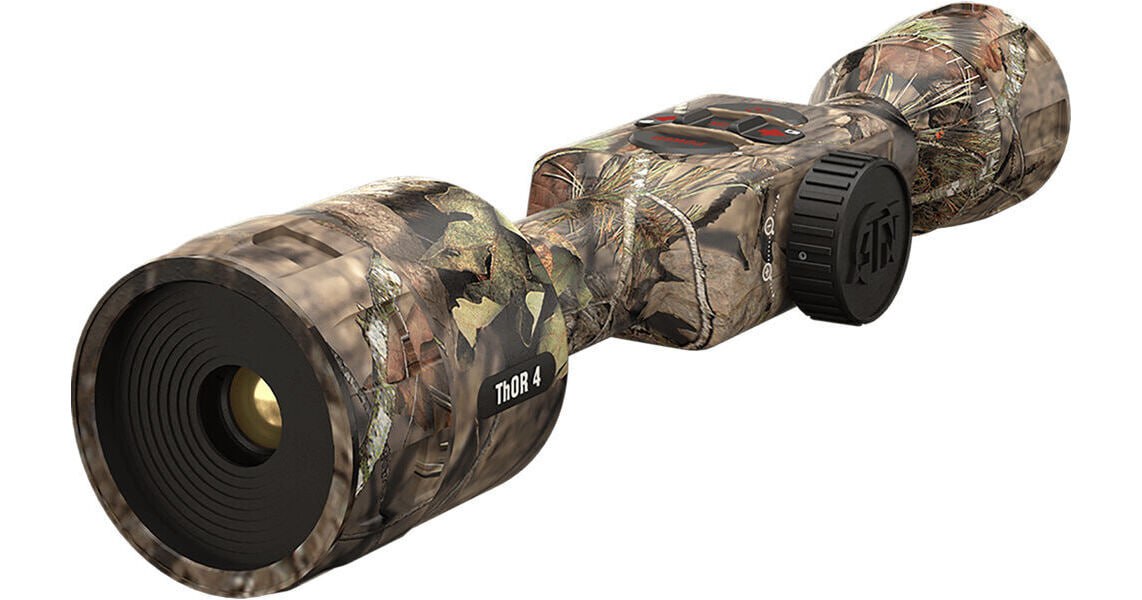
The ThOR 4 384 2-8x runs ATN’s Gen 4 384×288 LWIR sensor with 12-micron pixel pitch and 25mm lens. The 2–8x magnification range is one of the most practical in the mid-tier market — 2x for close tracking of moving targets, 8x for identification and longer shots. The 25mm lens with a 384-core sensor produces detection ranges pushing 800 yards on deer-sized game in good thermal contrast. That’s a meaningful step up from 256-core options in this price range.
ATN’s ballistic calculator on the ThOR 4 requires initial setup but works reliably once configured for your load. The recoil-activated video recording captures every shot automatically. The scope runs on ATN’s proprietary battery pack for 10–16 hours depending on temperature. The main tradeoff vs. simpler options in this bracket is menu complexity — ATN’s interface has more depth than Pulsar or Bering Optics, which means more features but also more setup time before a hunt. At $1,299, the ThOR 4 384 2-8x is a mature tool from a manufacturer with a long track record in this specific product category.
Pulsar Thermion XQ30F — best image quality under $1,500
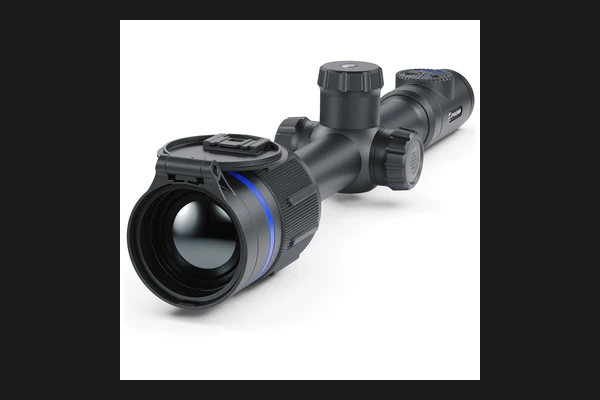
The Thermion XQ30F uses a 384×288 sensor at 17-micron pixel pitch — a different sensor architecture than the 12-micron designs used by AGM and ATN in this bracket. The 17-micron pixel pitch captures more energy per pixel, which produces richer contrast in challenging thermal conditions where 12-micron sensors can look flat. At 30mm focal length, detection range pushes past 900 yards on deer-sized targets. The image is widely considered the sharpest in this price bracket by hunters who have compared multiple options side by side.
The Thermion XQ30F builds on Pulsar’s traditional riflescope form factor: it looks and feels like a conventional scope, uses 30mm rings that hunters already own, and integrates with Pulsar’s Stream Vision app for recording and streaming. The Pulsar user interface is cleaner and faster to navigate than ATN’s system, with fewer menu layers to reach core functions. What the Thermion XQ30F doesn’t offer is ATN’s ballistic calculator and smart features. For hunters who primarily need a precise thermal image and fast field operation rather than a connected device, the Pulsar is the more direct tool at $1,399.
AGM Rattler V2 TS35-384 — best value 384-core scope at bracket ceiling
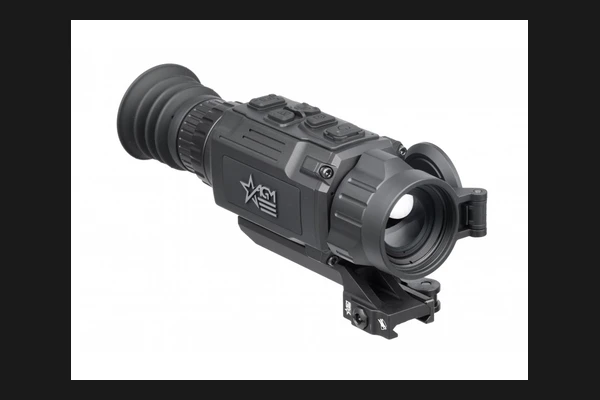
The Rattler V2 TS35-384 places a 384×288 12-micron LWIR sensor behind a 35mm germanium lens — the largest lens available on a Rattler V2 platform. The 35mm glass extracts maximum reach from the 384-core sensor, pushing detection on deer-sized targets to 900+ yards under good conditions and identification range to roughly 600 yards. Base magnification is 3.5x with digital zoom to 14x; the 7x zoom level holds resolution well for identification work at medium range.
The Rattler V2 platform is well-proven across hog, coyote, and deer hunting. The build handles .308 and similar recoil without issues that field hunters encounter, zero holds across temperature cycles, and the controls work reliably with gloved hands. At approximately $1,495, the TS35-384 sits at the upper ceiling of this bracket and delivers 384-core performance with a 35mm reach advantage over the shorter Rattler V2 variants. The tradeoff is the narrower FOV that comes with a 35mm lens — if you’re hunting in dense cover where fast target acquisition at close range matters, the shorter lens versions are more practical. For open terrain where range is the priority, the TS35-384 is the strongest value in this bracket.
InfiRay Tube TD50L — entry-level 384-core at the lower end of this bracket
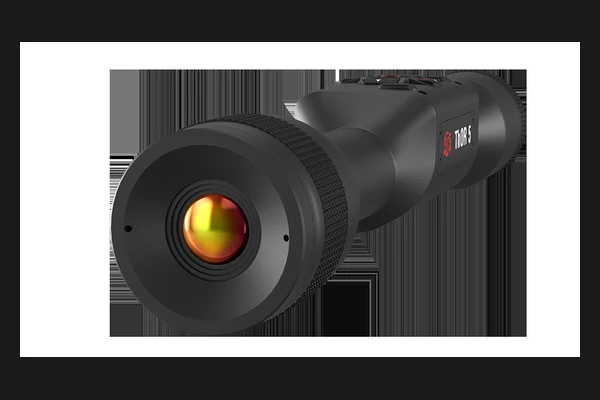
The InfiRay Tube TD50L is one of the more unusual entries in this bracket: a 384×288 LWIR sensor behind a 50mm lens at approximately $1,099 — the lowest price point in this guide. The 50mm lens is long for a thermal scope at this price and produces detection ranges over 1,000 yards in ideal conditions. The catch is FOV: a 50mm lens on this sensor produces a narrow field of view that makes close-range tracking difficult, and the base magnification is higher than most hunters prefer for snap shots inside 100 yards.
The InfiRay name carries less brand recognition than Pulsar or ATN in the US market, but the sensor performance is measurable and the price point is aggressive. For hunters who primarily shoot from fixed positions at known distances past 500 yards — long-range hog control on open farmland, coyote calling across fields — the TD50L’s narrow FOV is less of a liability and the reach advantage is more useful. Know your hunting context before choosing this one.
ATN ThOR LT 320 — lightweight 320-core option at the low end
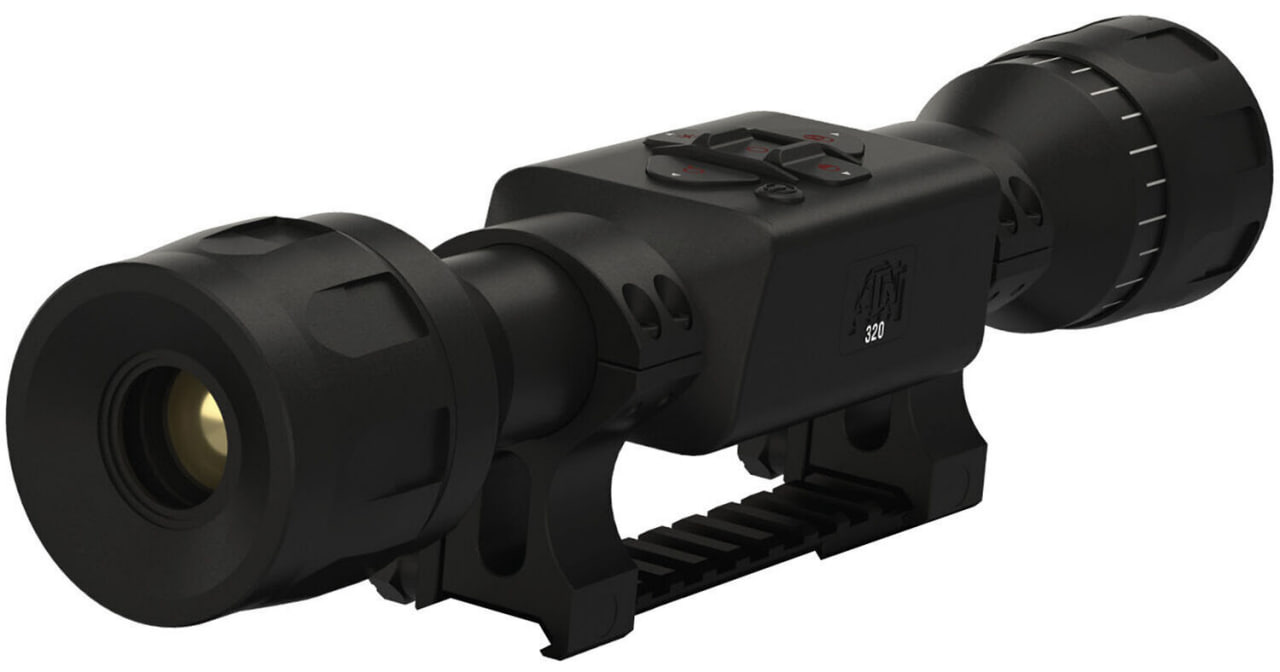
At $1,099, the ThOR LT 320 is technically within the under-$1,000 bracket at some retailers, but it belongs in this comparison because its 320-core sensor places it between the entry 256-core options and the 384-core mid-tier. It’s the lightest scope in this guide at around 1.1 lbs. The simplified feature set (no ballistic calculator, no GPS) means it boots fast and operates cleanly in the field. Detection on deer-sized game reaches around 600 yards. Battery on AA cells runs 8–10 hours.
For hunters who want to step up from 256-core resolution without paying for 384-core or dealing with ATN’s full smart feature stack, the ThOR LT 320 is a practical middle ground. It’s not the strongest thermal image in this bracket, but it’s a reliable, lightweight, and straightforward scope that works well inside 600 yards.
Bering Optics Super Hogster — wide-FOV 384 option for hog hunting
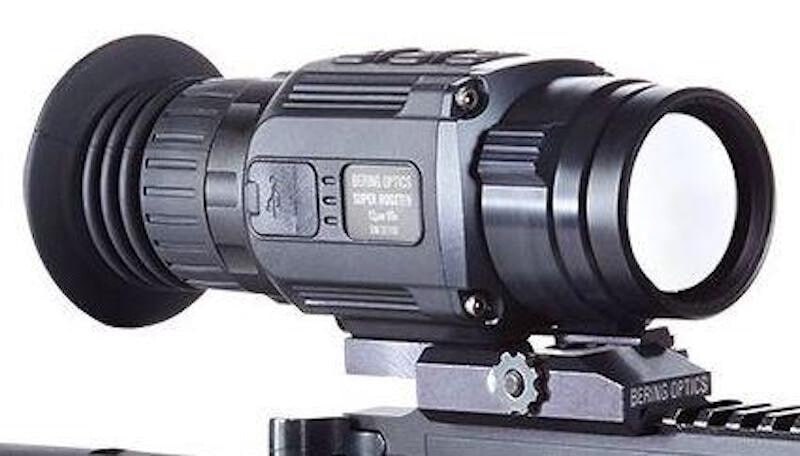
The Super Hogster runs a 384×288 12-micron sensor with a 25mm lens, tuned for wide field of view rather than maximum reach. The resulting FOV — wider than the 35mm options in this bracket — makes it particularly practical for hog hunting where multiple animals appear in the same thermal scene and fast target selection matters more than long-range detection. Detection range reaches 750 yards on deer-sized game with the 384-core sensor; at typical hog hunting distances inside 300 yards, the image is sharp and bright.
At approximately $1,195, the Super Hogster is priced competitively between the entry-level 320-core options and the premium 384-core picks. The Bering Optics build is solid, the controls are straightforward, and the scope doesn’t demand the learning curve that comes with ATN’s smart feature ecosystem. For dedicated hog hunters where situational awareness across a wide field matters as much as range, this is a strong option.
How to choose in the $1,000–$1,500 range
Start with the question of what you’re giving up if you stay under $1,000. The honest answer: image resolution at range and detection capability past 400–450 yards. If you regularly hunt open terrain and take shots past 400 yards — whether that’s calling coyotes across pasture or running hog control on open farmland — the 384-core options in this bracket make a real difference. If your hunting stays inside 300 yards in tighter terrain, the sub-$1,000 options may genuinely be sufficient.
Within this bracket, the focal length decision matters. A shorter lens (17–25mm) gives you a wider field of view and better situational awareness at close range. A longer lens (35–50mm) gives you more reach at the cost of narrower FOV. For hog hunting where multiple animals appear at once, the wider FOV scopes — Thermion XQ30F at 17mm, ATN ThOR 4 384 at 25mm, Bering Optics Super Hogster at 25mm — have practical advantages. For predator hunting across open terrain where animals come in from distance, the AGM Rattler V2 TS35-384 at 35mm or the InfiRay TD50L at 50mm give you the reach to identify targets earlier.
Smart features are a genuine fork in the road. The ATN ThOR 4 384 gives you a ballistic calculator, GPS, video recording, and smartphone integration in this price range. No other product in this bracket matches that feature stack. If those features matter to how you hunt — particularly video documentation of hunts or ballistic hold-over automation — the ATN is the right direction. If you want a clean thermal image and a scope that operates like a conventional optic without managing an interface, Pulsar’s Thermion XQ30F or the AGM Rattler V2 TS35-384 are better choices.
For further reading on where the $1,500+ market improves on what’s here, see: best thermal scope under $2,000 — what the next bracket adds.
Frequently asked questions
Is the jump from 256-core to 384-core worth $400–$500 more?
At hunting distances past 400 yards, yes. The 384×288 sensor resolves approximately 2.25 times as many pixels as 256×192. In practice this means cleaner target identification at range, better performance in lower thermal contrast conditions (fog edge, warm nights), and a generally sharper image. Inside 300 yards, the difference is real but less critical for making hunting decisions. The question is whether your hunting primarily happens inside or outside that 300-400 yard zone.
Does the Pulsar Thermion XQ30F hold zero reliably?
Yes — the Thermion line is known for reliable zero retention across temperature cycles and recoil. The traditional riflescope form factor with 30mm tube mounts in standard rings and holds zero through typical hunting caliber recoil. Pulsar specifically designs the Thermion platform for hunting use where zero reliability is a hard requirement, not a secondary concern.
Can the AGM Rattler V2 TS35-384 detect coyotes at 600 yards?
Detection at 600 yards — yes, in good thermal contrast conditions (cool night, warm animal). Identification with enough certainty to confirm species and make a shot decision at 600 yards requires a bit more thermal differential, but the 384-core sensor with 35mm lens handles that range in typical predator hunting conditions. At 400–500 yards the image is reliably clear for both detection and identification. The 600-yard figure assumes a cool night, dry air, and reasonable temperature difference between the animal and background.
Is the InfiRay Tube TD50L reliable for hunting use?
InfiRay manufactures thermal sensor cores used by multiple brands, including several recognizable names that rebrand OEM sensors. The TD50L hardware is a known sensor at a competitive price. The brand has less established US service infrastructure compared to Pulsar or ATN, which matters if you need warranty service or support. For hunters comfortable with that tradeoff and willing to do more pre-purchase research, the performance-per-dollar is strong. For hunters who value established US support channels, Pulsar and ATN are more straightforward choices in this bracket.
What’s the difference between ATN ThOR 4 384 1.25-5x and 2-8x?
The key difference is magnification range and lens. The 1.25-5x variant uses a 19mm lens with a lower minimum magnification — better for close-range predator hunting and dense cover where you need wide FOV at low power. The 2-8x variant uses a 25mm lens for more reach. Detection range on the 2-8x is higher than the 1.25-5x because of the longer focal length. If most hunting is inside 200 yards with fast target acquisition, the 1.25-5x is the better tool. Past 400 yards in open terrain, the 2-8x gives you more reach.
Final recommendation
At $1,299, the ATN ThOR 4 384 2-8x delivers the most complete package in this bracket — 384-core sensor, smart features, solid detection range, and a manufacturer with an established track record in the US market. It’s the default recommendation for hunters who want the full feature set and are comfortable with ATN’s interface.
For hunters who prioritize image quality and simple operation over connected features, the Pulsar Thermion XQ30F at $1,399 is the better call. The 17-micron sensor produces richer contrast in difficult conditions, and Pulsar’s interface is faster to navigate in the field. If you’re a traditional hunter who wants a scope that behaves like a scope rather than a device, the Thermion XQ30F is the stronger pick.
At the top of the bracket, the AGM Rattler V2 TS35-384 at $1,495 gives you 384-core resolution with 35mm reach — the longest focal length available at this price. For open-terrain hunters where 600–900 yard detection is the primary goal, it earns its position at the bracket ceiling.
Affiliate disclosure: This page contains affiliate links. If you purchase through an AGM Global Vision link on this page, USA Night Vision may earn a commission at no additional cost to you. Competitor product links use href=”#” placeholders and do not earn commissions. All recommendations reflect editorial judgment based on research and product specifications. See our full affiliate disclosure policy.