


- Best civilian warranty & availability
- Best Price/Performance ratio
- Key tradeoff: None for civilian use
Chosen by 15,000+ hunters in 2024


Best Night Vision Equipment Reviews

Symon Baker

I am absolutely blown away by AGM night vision device!
AGM’s night vision device, man, it surprised me in that annoying way where you expect “pretty good” and instead you get “okay wow, this is actually legit.” The clarity is sharp enough that I had this moment thinking, is this even fair, like am I cheating at night now. And the field of view, huge, bigger than whatever number they advertise, or maybe it just feels bigger when everything is dark and you’re trying not to trip on roots. Build quality is sturdy, borderline overbuilt, the sort of thing you can toss into a bag without wrapping it in bubble wrap or babying it. Controls are stupid simple, which is honestly refreshing because I’ve had gear where the manual felt like it hated me personally. This device changed my nighttime habits a bit, not dramatically, but enough that I noticed. And yeah, it’s worth the price, even if I grumbled before buying it, which now feels kind of pointless.

Hamad Al Silicanty

I am absolutely blown away by AGM night vision device!
So, AGM’s night vision device did that thing where it works better than you expect and you start questioning why you didn’t buy it earlier. The clarity is ridiculous, almost like someone wiped your eyes for you, and no, that’s not an exaggeration, at least not today. The field of view feels wide, open, almost like stepping from a narrow hallway into a stadium, and maybe that’s too big of a comparison but it popped into my head so whatever. The build is tough, real tough, reminds me of gear I used back in 2019 on a trip I probably shouldn’t have taken but that’s another story. Controls are obvious, almost laughably simple, which is perfect because darkness makes everyone clumsy. It changed how I move around at night, gave me this weird confidence boost I didn’t realize I needed. A game changer, no question, and definitely worth what I paid, even if I hesitate saying that because prices annoy me on principle.

Ann Jubelleq

I am absolutely blown away by AGM night vision device!
I didn’t expect this AGM night vision thing to hit me like that, honestly, and maybe that sounds dramatic but whatever, it’s what happened. The clarity at night is wild, like you go from squinting into nothing to suddenly seeing shapes and edges and small stuff you swear wasn’t there a second ago. And the field of view, it feels wider than it should be for something that doesn’t weigh much, almost like someone stretched the scene out with their hands. The build is solid, no nonsense, the type of gear you’d trust on a night hike even if you’re already regretting being outside. Controls are simple, basically instinctive, and I kind of love that because I’m not great with fiddly tech when my fingers are cold. It changed how I behave after dark, maybe more than I’m ready to admit. It’s a game changer, for me at least, and honestly it’s worth the money, maybe even more than I’d say out loud.
Common Night Vision Questions
Night vision is a technology that allows you to see in low-light conditions or complete darkness. It collects and amplifies existing light, such as moonlight or starlight, to create a visible image.What is night vision?
Most night vision devices (NVDs) use an image intensifier tube. This tube takes in faint ambient light, converts it into electrons, and then accelerates those electrons onto a phosphor screen, where they create a much brighter image that you can see through the eyepiece.
The most common types are image intensifier tubes, which are categorized into generations (Gen 1, Gen 2, Gen 3). There are also digital night vision devices that use a camera sensor, similar to a digital camera, to capture and display the image.
Night vision relies on amplifying existing light to create an image, so it's affected by light conditions. Thermal imaging, however, detects the heat (infrared energy) radiated by objects and people, allowing it to "see" through darkness, fog, and smoke, and is not reliant on any light source.
Key features to consider are the generation (Gen 2 or 3 for better performance), clarity and resolution (measured in line pairs per millimeter), field of view, battery life, and the device's durability and weight.
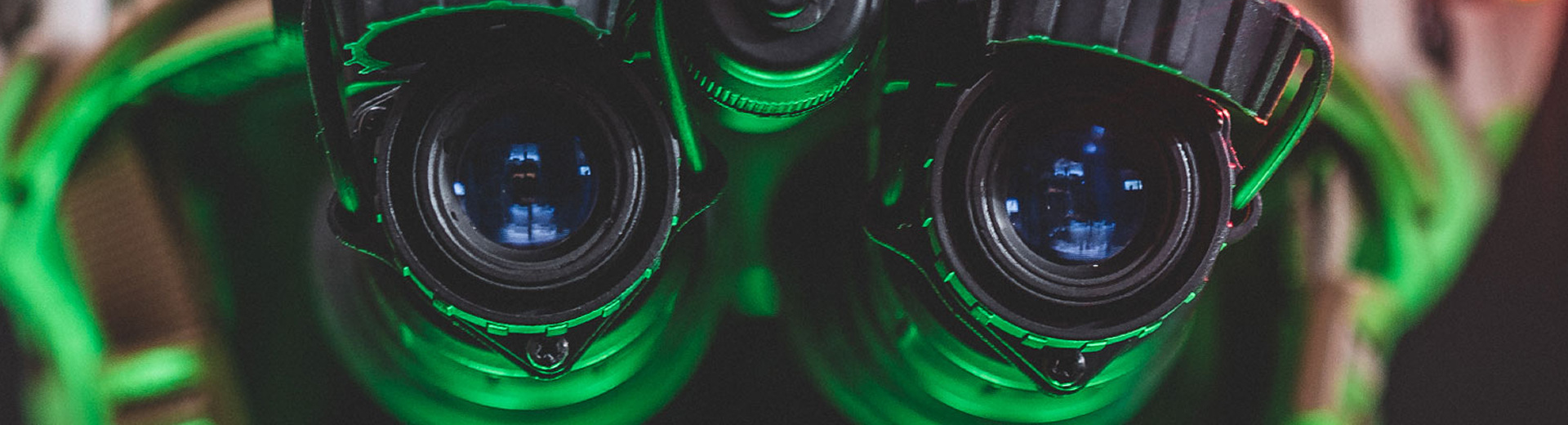
How far can I see with a night vision device?
When using a night vision device, how far you can see depends on several factors, including the generation of the device, ambient light conditions, weather, and the type of lens used. Generally, consumer-grade night vision devices can detect human-sized objects at distances ranging from 100 to 300 meters in low-light conditions. Military-grade or high-end night vision optics can extend this range to 500 meters or more, especially when aided by infrared (IR) illuminators that act like invisible flashlights to enhance clarity.
However, it’s important to understand that "seeing" with night vision is not the same as seeing during the day. Night vision amplifies existing light—such as moonlight or starlight—to produce a visible image. In complete darkness, the effectiveness of the device heavily depends on how strong its IR capabilities are. Additionally, environmental factors like fog, rain, or smoke can reduce visibility even with the best equipment.
What you see through a night vision device is also typically lower in resolution and may appear in shades of green, which are easier for the human eye to distinguish in the dark. While night vision is incredibly helpful for navigation and surveillance at night, it is not a magic tool that provides limitless vision. The realistic answer is that you can see as far as the technology and conditions allow—sometimes clearly up to several hundred meters, but often less when the environment is challenging.
Latest From Blog

Can You Use a Thermal Scope During the Day? Daylight Use/Sun Safety and Zeroing Tips.

Night Vision Range Explained: Detection, Recognition, Identification, and Real Hunting Distance

How to Set Up an IR Illuminator for Night Vision: Placement, Beam Width, and Field Mistakes
Expert Buying Guides
Thermal Scope Buying Guides
The sweet spot for serious hunters -- real detection range without the k price tag.
Best Thermal Scopes Under ,000Step up to 640-resolution sensors and longer detection range for open-country shooting.
Best Thermal Scopes for Hog HuntingHogs are tough, fast, and moving at night -- here's what actually works in the field.
Best Thermal Scopes for Coyote HuntingCalling in song dogs at 200+ yards after dark demands a scope that picks up a small heat signature fast.
Best Clip-On Thermal ScopesMount in front of your existing rifle scope and go thermal without changing your zero.
Best Thermal Monoculars Under ,000For scouting, spotting, or checking fence lines -- solid thermal handhelds that won't break the budget.