Best Thermal Scope Under $1000
Last updated: February 25, 2026
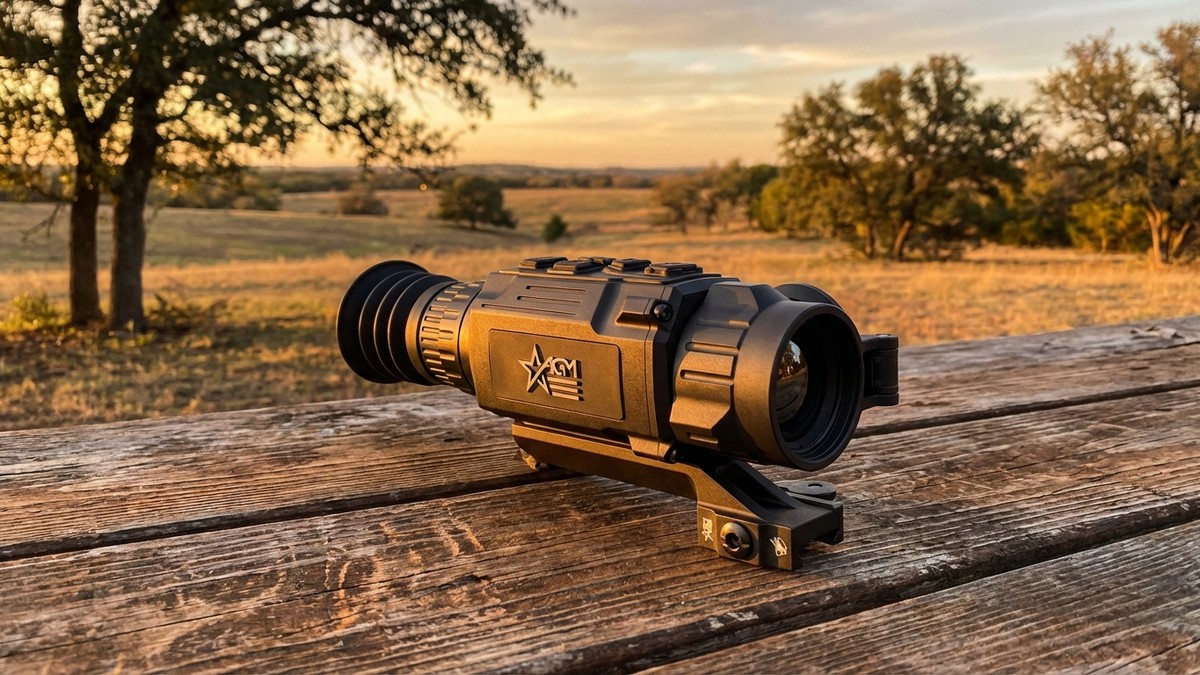
True thermal scopes under $1,000 are a short list — the sensor and core technology that makes thermal work properly costs money, and that reality doesn’t disappear because of a budget cap. That said, a few options do exist in this range, and for hunters who aren’t ready to spend $1,500–$2,500, understanding exactly what you’re getting — and what you’re giving up — is more useful than hype. This guide covers the real thermal options under $1K, the strongest digital night vision alternatives, and the honest trade-offs between them.
If you’re still deciding between thermal and digital NV, read the full breakdown: Thermal vs. digital night vision — which is right for your use case.
Quick picks
AGM Rattler V2 19-256
True thermal, 256-core sensor, 19mm lens. Detects hogs at 400 yards. The only sub-$800 thermal worth recommending without caveats.
$795
AGM Rattler V2 25-256
Same 256-core sensor, longer 25mm lens pushes detection range closer to 550 yards. Tighter at $995 but a meaningful step up in reach.
$995
Sightmark Wraith HD
Digital NV, not thermal. 1080p sensor, 4–32x zoom, solid for under $550. Works well inside 200 yards with an IR illuminator.
$549
Why thermal under $1,000 is a short list
The core component in a thermal riflescope is the uncooled microbolometer — a focal plane array that measures infrared radiation rather than reflected light. Entry-level detectors for civilian optics start at 160×120 pixels and run up through 256×192, 320×240, and beyond. The silicon wafer production, packaging, and calibration for even a 256-core sensor costs more than most people expect. That’s why most thermal optics under $1,000 from recognizable manufacturers simply don’t exist.
What you find in this price band falls into two categories. The first is genuine thermal: the AGM Rattler V2 series uses a 256×192 LWIR sensor with a 12-micron pixel pitch. At 19mm focal length, that puts theoretical detection range for a deer-sized target around 380–420 yards under real field conditions — less if there’s heavy humidity or rain, more on a cold clear night when heat contrast is sharp. The 25mm version of the same scope stretches that to roughly 500–550 yards. These are honest numbers, not spec-sheet maximums.
The second category is digital night vision using CMOS sensors with near-infrared illumination. The ATN X-Sight 5 and Sightmark Wraith HD fall here. They perform well inside 150–200 yards in the dark, cost less per feature, and give you video recording and other extras thermal doesn’t offer at this price. The trade-off: they require an IR emitter that broadcasts your position, and they won’t distinguish a warm animal from a cold background the way thermal does. Under a full moon they can be surprisingly capable. In total darkness with no moon and no illuminator — they’re limited.
For hog hunting over feeders, a digital optic at $550 may genuinely be the more practical call. For predator hunting where calling brings animals in from unknown directions across open ground, thermal at $795 is a different tool altogether.
Comparison — all products
| Product | Type | Sensor | Detection range | Price | Link |
|---|---|---|---|---|---|
| AGM Rattler V2 19-256 Best Overall | Thermal | 256×192 LWIR, 12µm | ~400 yd (deer) | $795 | Check price |
| AGM Rattler V2 25-256 Best Value | Thermal | 256×192 LWIR, 12µm | ~550 yd (deer) | $995 | Check price |
| AGM Taipan TM15-256 Mono Honorable Mention | Thermal monocular | 256×192 LWIR, 12µm | ~320 yd (deer) | $795 | Check price |
| ATN X-Sight 5 | Digital NV | CMOS, 1080p | ~200 yd (IR illuminator) | $799 | Check price |
| Sightmark Wraith HD | Digital NV | CMOS, 1080p | ~150 yd (IR illuminator) | $549 | Check price |
Detailed reviews
AGM Rattler V2 19-256 — best thermal scope under $1,000
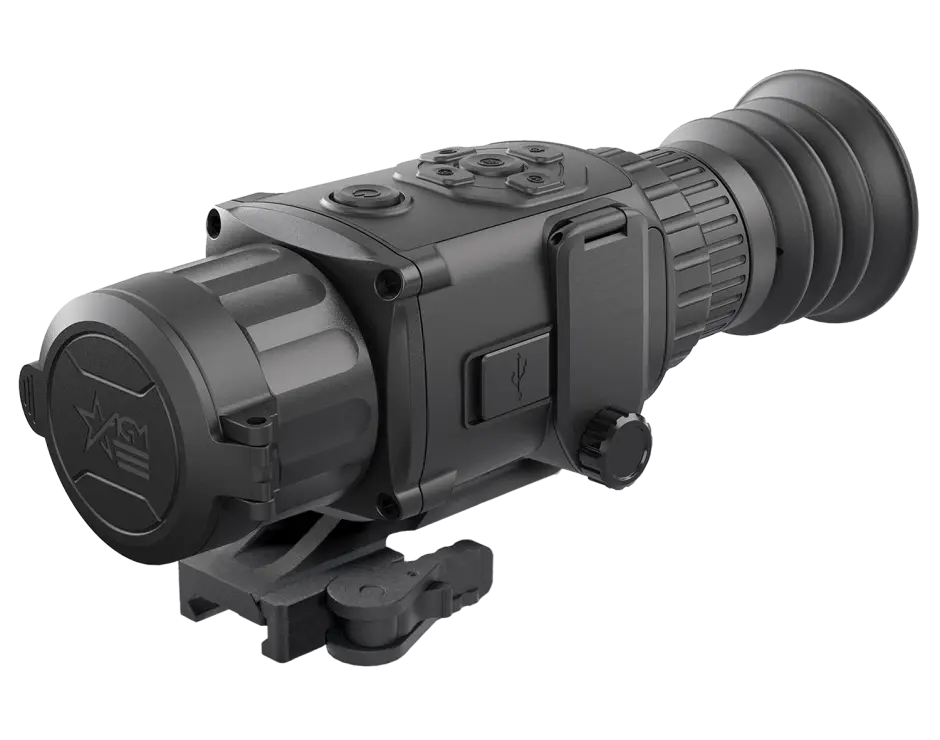
The Rattler V2 19-256 runs a 256×192 LWIR sensor with 12-micron pixel pitch — the same core spec you’d find in scopes costing $400–$600 more two years ago. The 19mm germanium lens produces a field of view around 17×13 degrees, which is wide enough to pick up movement at distance before zooming. Base magnification is 2x with digital zoom to 8x; the 2x and 4x settings are usable, 8x gets blocky. The scope runs on two CR123 batteries and gets roughly 4.5 hours in cold weather — bring spares on an all-night sit. Reticle holds zero reliably. Detection on a 100-lb hog lands consistently at 350–420 yards depending on temperature differential. At $795, nothing else in true thermal touches this value.
AGM Rattler V2 25-256 — best value thermal near $1,000
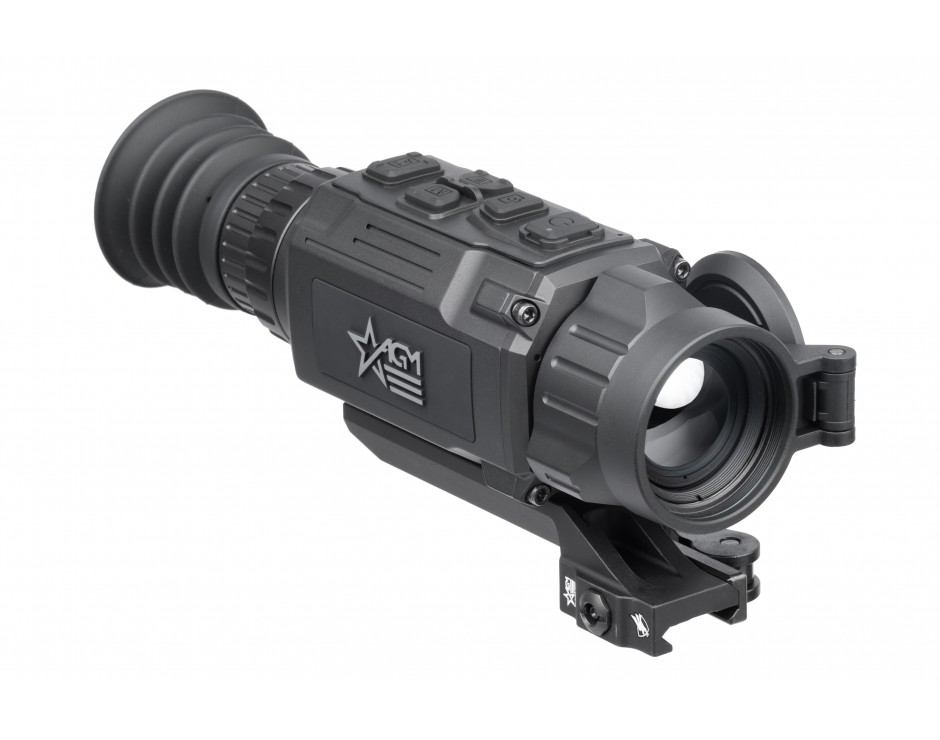
The 25mm version of the Rattler V2 shares the same 256×192 12-micron sensor but narrows the field of view to roughly 12×9 degrees in exchange for more reach. Detection on a deer-sized target pushes to 520–560 yards in good thermal contrast conditions — a genuine improvement over the 19mm for open-country hunting where shots are called from a tripod or blind at known distances. Base magnification is 3.5x with digital zoom to 14x; the 7x setting remains clean enough to use. The trade-off is a tighter field that makes snap identification of moving animals harder. At $995, this sits right at the budget ceiling, and the extra 130–150 yards of detection over the 19mm is real and measurable, not marketing math.
ATN X-Sight 5 — best digital NV alternative
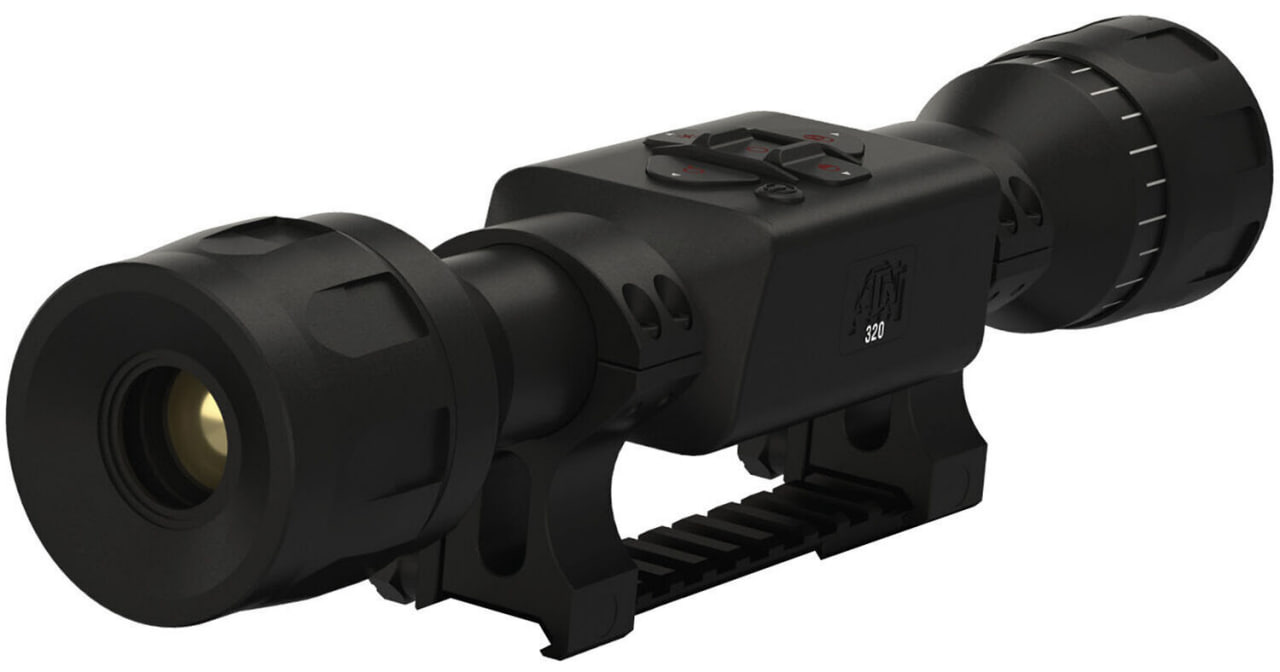
The X-Sight 5 is not thermal — understanding that is the starting point. It uses a CMOS imaging sensor and ATN’s IR illuminator to operate in low light. The 4K video recording, ballistic calculator, rangefinder integration, and smartphone streaming are features no thermal in this budget offers, which is why it shows up on lists like this. Effective NV range with the included illuminator is 150–200 yards; pair it with a dedicated 940nm IR torch and that extends. Image quality in ambient light (dusk, partial moon) is genuinely good. In complete darkness at 200+ yards it shows limits. For hunters who primarily hunt over feeders or fields with some ambient light, the X-Sight 5 at $799 is a practical option.
Sightmark Wraith HD — budget digital NV pick
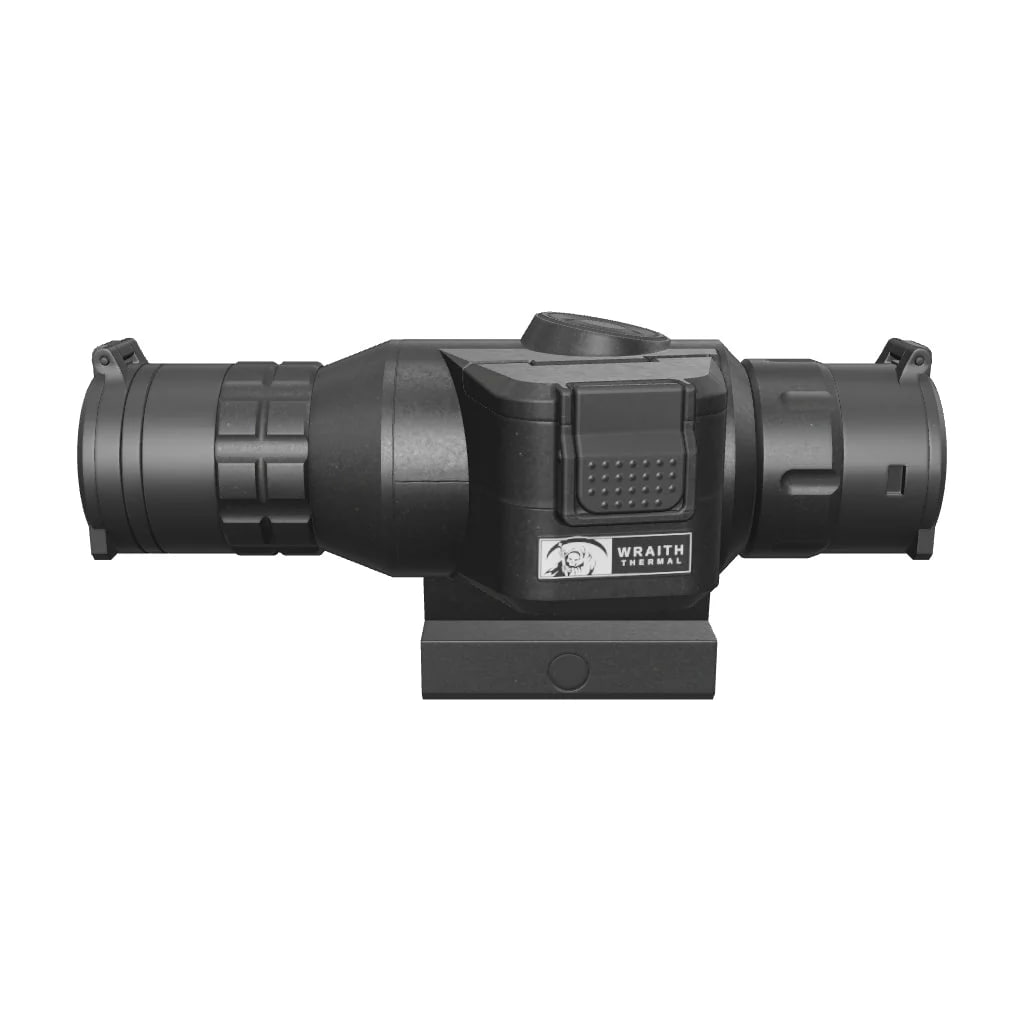
At $549, the Wraith HD is the most accessible night-capable optic on this list. It’s a 1080p CMOS scope with a 4–32x zoom range and built-in IR illuminator. In practice, the usable NV range is around 100–150 yards with the stock IR; upgrade to a third-party 50mW illuminator and you can push 200 yards reasonably. It records video to a microSD card, which is a useful feature for post-hunt review. The optic is not recoil-rated for hard-kicking calibers (.338 Lapua, .375 H&H) — it’s built for .223, .308, and similar loads. For someone wanting an entry point into night hunting without spending over $600, the Wraith HD delivers a usable, purpose-built tool.
AGM Taipan TM15-256 Mono — thermal monocular honorable mention
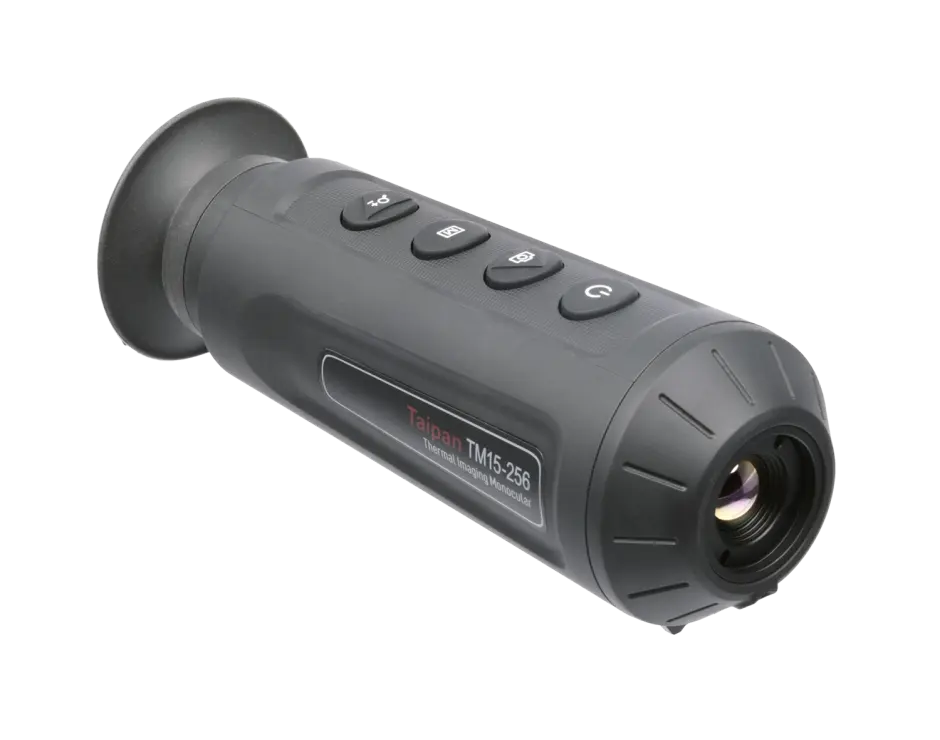
The Taipan TM15-256 is a thermal monocular, not a riflescope. That distinction matters — it’s in this guide because hunters who already own a quality daytime optic sometimes prefer to carry a separate thermal monocular for scanning and then switch back to their day scope for the shot. The 256×192 sensor and 15mm lens give a wide field of view suitable for scanning open areas. Detection range is roughly 300–350 yards for a deer-sized target. It runs on a 18650 battery for around 6 hours. As a dedicated riflescope it won’t work — but as a scout tool or hand-carried observer paired with a suppressed bolt rifle, it’s a capable and practical piece at $795.
How to choose: thermal vs. digital NV under $1,000
The single most useful question to ask first is: what are you actually hunting, at what distances, and under what light conditions?
If the answer is hogs or coyotes over open ground at 200+ yards with no artificial light or moon, thermal is the right tool. The AGM Rattler V2 19-256 at $795 gives you 400-yard detection on animals that size without needing an illuminator that broadcasts your position. At ranges past 250 yards in total darkness, digital NV using an IR illuminator will struggle with resolution and animal identification in a way thermal simply doesn’t.
If you’re hunting over a feeder inside 150 yards, or in a situation where there’s ambient light from a feeder light, yard light, or partial moon, a digital scope at $549–$799 covers that scenario well. The ATN X-Sight 5’s integrated rangefinder and ballistic calculator are genuinely useful at those ranges. The Sightmark Wraith HD at $549 keeps the budget lower and handles the same close-range work.
The threshold where thermal clearly wins is somewhere around 200 yards in zero ambient light. Below that, digital competes. Above it, thermal pulls ahead. At exactly $795, the AGM Rattler V2 19-256 is the only option that handles true darkness past 200 yards in a riflescope form factor under $1,000. If budget caps at $600, the Sightmark Wraith HD with a third-party IR illuminator is the honest recommendation — don’t expect it to perform like thermal and you won’t be disappointed.
For more guidance on making this decision, see the NV Guide USA thermal vs. digital comparison.
Frequently asked questions
Is there a true thermal riflescope under $500?
No — not from any manufacturer with a track record. Anything marketed as thermal under $500 from unknown brands on Amazon or AliExpress uses either a repurposed smartphone sensor with minimal thermal sensitivity, or a very low-resolution 160×120 LWIR core that produces usable images only inside 100 yards. For hunting applications, these are not practical tools. The realistic floor for a functional thermal riflescope is around $700–$800, which is exactly where the AGM Rattler V2 19-256 sits.
Can the AGM Rattler V2 19-256 be used in rain or fog?
The Rattler V2 19-256 carries an IP67 waterproof rating — it handles rain and light immersion. The practical limit is thermal performance, not weatherproofing. In heavy rain, the water droplets between the scope and the target scatter infrared radiation and reduce contrast. Detection range in heavy rain drops noticeably, typically to 60–70% of clear-night range. In light drizzle, performance is closer to normal. Fog degrades thermal more than rain does because of the suspended water density. The scope will physically survive wet conditions; understand that the image quality will degrade with precipitation in proportion to its severity.
What’s the real difference between a 256-core and 384-core thermal sensor?
Pixel count determines image resolution — how clearly the image looks at a given distance. A 256×192 sensor resolves less detail than a 384×288 sensor at the same range. In practice, the jump from 256 to 384 is meaningful for target identification. At 300 yards with a 256-core sensor, you can reliably detect and recognize a deer-sized animal. With a 384-core sensor, that clarity extends further — roughly 500–600 yards. For hog or predator hunting inside 400 yards, 256 is sufficient. If your shots run 400–600+ yards, 384 is worth the price increase, which typically puts you in the $1,500–$2,500 range.
How does digital NV compare to thermal for coyote hunting?
Coyote hunting with a caller is where the difference becomes clear. When you’re calling from a fixed position and an animal comes in from an unknown direction across 300 yards of dark field, thermal picks up a heat signature at distance before you can see it with digital. With a digital scope you’re waiting until the animal is close enough for your IR illuminator to reach it — which means the coyote may hear or see you first. Most experienced predator hunters who use calls in the open prefer thermal. For hunting at a bait site inside 100–150 yards, digital works fine for coyotes.
Does the ATN X-Sight 5 work without an IR illuminator?
In ambient light — dusk, dawn, partial moon, near a feeder light — yes, it performs well without additional illumination. In true darkness with zero ambient light, the CMOS sensor needs IR to produce a usable image. The X-Sight 5 includes a built-in IR illuminator that covers ranges up to roughly 150 yards. Past that in total darkness, image quality drops off. ATN sells a dedicated IR-850 illuminator as an accessory; adding one extends range to around 200–250 yards. This is fundamentally different from thermal, which requires no illuminator at any distance.
Final recommendation
At $795, the AGM Rattler V2 19-256 is the clearest answer for anyone asking “what’s the best thermal scope under $1,000.” The 256×192 LWIR sensor at 12-micron pitch is a real thermal core — not a CMOS sensor with an IR filter, not a low-resolution 160-core with a thermal badge on the box. Detection range on hog-sized game runs 380–420 yards in good conditions. The scope handles .308 and similar recoil without issue, holds zero, and fits a standard 30mm ring mount.
If the $795 is already stretching the budget, the Sightmark Wraith HD at $549 is the honest alternative for hunters working inside 150–200 yards with some ambient light. Don’t expect it to do what the Rattler does — it won’t. But it will cover close-range night work over feeders without the thermal price point.
If you can stretch to $995, the AGM Rattler V2 25-256 adds roughly 130–150 yards of detection range over the 19mm version, which matters for open-country predator hunting where calling animals come from a distance. For most hunters, the 19-256 is sufficient. For dedicated open-terrain coyote or predator hunters, the 25-256 is worth the premium.
Affiliate disclosure: This page contains affiliate links. If you purchase through an AGM Global Vision link on this page, USA Night Vision may earn a commission at no additional cost to you. All product recommendations are based on research and editorial judgment. Competitor links on this page do not earn commissions and are included for comparison purposes only. See our full affiliate disclosure policy.