Best Night Vision Rifle Scopes 2026
Last updated: February 26, 2026
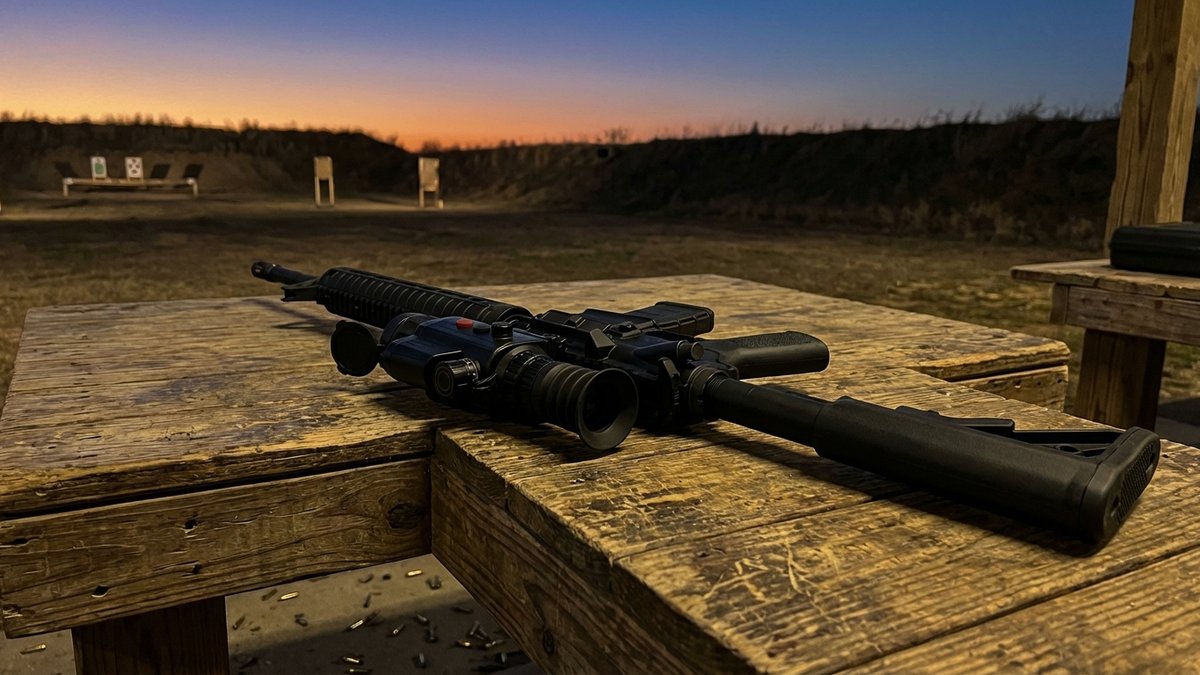
Dedicated NV rifle scopes occupy a narrower market than goggles and monoculars, but they’re the most direct path to effective shots after dark. The vast majority of NV scopes on the civilian market today are digital — CMOS sensors, IR illuminators, and onboard displays — not image intensifier tube-based. That’s not a compromise: it’s a deliberate tradeoff that makes NV scopes accessible, feature-rich, and practically useful at price points where Gen 3 tube scopes simply don’t exist in legal commercial form. This page covers the top digital NV scopes for 2026, plus one thermal option for reference.
For a broader look at brands and who makes reliable NV hardware, the NV brands guide covers the major players across all product categories.
Quick picks
ATN X-Sight 5
4K sensor, integrated rangefinder, ballistic calculator. Best all-around digital NV scope at this price.
$800–$1,200
Sightmark Wraith 4K Max
4K resolution, 3-24x zoom, sub-$700. Reliable workhorse for hog and coyote hunting.
$500–$700
Pulsar Digex C50
WiFi streaming, Pulsar app integration, excellent build. For shooters who want professional features.
$1,000–$1,300
Comparison table
| Model | Type | Resolution | Magnification | Price | |
|---|---|---|---|---|---|
| ATN X-Sight 5 | Digital NV | 4K (3840×2160) | 3-15x or 5-25x | $800–$1,200 | Check price |
| ATN X-Sight LTV | Digital NV | 1080p | 3-9x or 5-15x | $350–$500 | Check price |
| Sightmark Wraith 4K Max | Digital NV | 4K (3840×2160) | 3-24x digital | $500–$700 | Check price |
| Sightmark Wraith Mini | Digital NV | 1080p | 2-16x digital | $350–$450 | Check price |
| Pulsar Digex C50 | Digital NV | 1280×720 display / CMOS | 1-6x optical + digital | $1,000–$1,300 | Check price |
| AGM Adder TS50-640 | Thermal | 640×480 thermal core | 2.5-20x | $2,000–$2,600 | Check price |
Detailed reviews
ATN X-Sight 5 — best overall digital NV scope
The X-Sight 5 is ATN’s current flagship and the most feature-complete digital NV scope on the consumer market. The 4K sensor (3840×2160) captures substantially more detail than the 1080p sensors in budget units, and the difference is visible at 100+ yards — you can identify targets rather than just detect movement. The scope ships in two magnification ranges: 3-15x (better for mid-range hunting) and 5-25x (for open-ground applications where 300-yard shots are realistic).
Smart features include an integrated laser rangefinder, a ballistic calculator that connects to ATN’s app via Bluetooth, one-shot zero, and recoil-activated video that saves a clip before and after each shot. Battery life runs 10–16 hours depending on IR illuminator use — better than earlier ATN generations that required external battery packs. The built-in 850nm IR illuminator covers 150–200 yards; supplement with an external IR for extended range.
Recoil rating is up to .375 H&H on the spec sheet. Real-world experience on .308 and larger calibers has been generally solid, though ATN’s electronics have historically been the weakest link vs. the optics themselves. The scope holds zero well on standard calibers.
Specs: 4K sensor, 3-15x or 5-25x, 850nm IR illuminator, 384m IR range (spec), WiFi/Bluetooth, video recording, ballistic calculator, ~18oz. Price: $800–$1,200.
ATN X-Sight LTV — best budget digital NV scope
The LTV (Light, Thin, Versatile) is ATN’s answer to the budget segment. It runs a 1080p sensor rather than 4K, which shows at magnification — expect softer images above 6-7x. The magnification range options (3-9x and 5-15x) are appropriate for the sensor resolution. At 3-6x, the image is clean enough for hunting applications at 50–100 yards.
The LTV retains most of the X-Sight 5’s smart features: ballistic calculator, one-shot zero, recoil-activated video, Bluetooth/WiFi, and ATN app compatibility. The build is lighter and the price is significantly lower. For a hunter who primarily runs sub-100 yard shots on hogs or coyotes and doesn’t need maximum resolution, the LTV does the job without the X-Sight 5’s premium.
Specs: 1080p sensor, 3-9x or 5-15x, 850nm IR, WiFi/Bluetooth, video recording, ~14oz. Price: $350–$500.
Sightmark Wraith 4K Max — value 4K digital NV scope
The Wraith 4K Max competes directly with ATN at a lower price by trimming smart features rather than sensor quality. The 4K sensor (3840×2160) is the same headline spec as the X-Sight 5, and the 3-24x digital zoom range gives you flexibility across shot distances. What you lose compared to ATN: no integrated rangefinder, no ballistic calculator, simpler app integration.
The Wraith’s strengths are build simplicity and reliability. Fewer electronics means fewer failure points. The 1080p display doesn’t fully render the 4K sensor output (you’re looking at a downsampled image), but the extra sensor resolution contributes to better detail at mid-zoom levels. The 850nm IR illuminator is serviceable to 100 yards; paired with an external Sightmark or Streamlight IR unit, 200-yard performance is achievable.
This is one of the more popular NV scope choices for night hog hunting because of its price point relative to capability. It handles .308 recoil without issues. The housing is IP55 rated.
Specs: 4K CMOS sensor, 1080p display, 3-24x digital zoom, 850nm IR, video/photo recording, IP55, ~34oz. Price: $500–$700.
Sightmark Wraith Mini — compact digital NV scope
The Wraith Mini is the compact version of the Wraith line — noticeably lighter and shorter than the full-size Wraith 4K Max, which matters for platform balance. It runs a 1080p sensor with 2-16x digital zoom. The lower base magnification (2x) makes it better suited for close-to-mid-range work — property defense, hog hunting at 50–75 yards, small predator control.
At this price point, the Wraith Mini competes with the ATN X-Sight LTV on paper but the use cases differ: the LTV offers more smart features, the Wraith Mini offers a more compact form factor and simpler operation. If mount clearance is a concern or you want minimal scope weight, the Mini is worth considering over its bigger sibling.
Specs: 1080p sensor, 2-16x digital zoom, 850nm IR, video recording, compact housing, ~22oz. Price: $350–$450.
Pulsar Digex C50 — premium digital NV scope
The Digex C50 sits above the ATN and Sightmark options in both price and build quality. Pulsar’s industrial design and manufacturing standards are visibly better — the housing feels more solid, the controls are more deliberate, and the WiFi streaming via Pulsar’s Stream Vision app actually works reliably. The C50 designation indicates the 50mm objective lens configuration.
The optical system uses a traditional scope-style design with a digital NV module rather than a pure digital sensor setup, giving cleaner image transmission. The built-in recoil-activated recording captures video clips automatically. WiFi streaming lets you monitor from a phone or tablet — useful for stand hunting where a spotter can track without flagging movement.
Battery life via the included IPS5 pack runs approximately 7–8 hours. Compatible with Pulsar’s external battery packs for extended sessions. The Digex is rated for calibers up to 12-gauge and .375 H&H — a credible spec for larger calibers, verified by field use on .300 Win Mag without zero drift.
Specs: CMOS sensor, 1x optical + digital zoom to ~8x, 940nm IR option available, WiFi streaming, recoil-activated video, IPS5 battery, IP67 rated. Price: $1,000–$1,300.
AGM Adder TS50-640 — thermal comparison
The Adder TS is not a digital NV scope — it’s a thermal scope with the same form factor. It detects heat signatures rather than amplifying light, which gives it one significant advantage: it works regardless of ambient light and is not dependent on an IR illuminator. Animals at 400+ yards are visible as bright heat signatures even in complete darkness or through light fog.
The 640×480 thermal core at 50mm produces a detailed image at standard hunting distances. AGM builds solid hardware at more accessible price points than Pulsar or FLIR in the thermal category. The tradeoff vs. digital NV: you’re reading heat, not visible detail. Target identification (buck vs. doe, coyote vs. domestic dog) requires practice reading thermal signatures rather than visual recognition.
Include this in your consideration if detection range and all-condition operation matter more than visual image quality. The price premium over digital NV is justified for wide-field predator control or situations where IR illuminator visibility is a concern.
Specs: 640×480 thermal core, 50mm lens, 2.5-20x, video recording. Price: $2,000–$2,600.
Digital vs Gen 3 for rifle scopes
You’ll notice this list has zero Gen 3 image intensifier tube scopes. That’s not an oversight — Gen 3 rifle scopes are nearly nonexistent on the civilian commercial market, and there are three concrete reasons for it.
ITAR restrictions. Gen 3 tubes containing GaAs photocathodes are controlled under the International Traffic in Arms Regulations. Exporting them requires a State Department license. Manufacturers building rifle scope platforms around Gen 3 tubes face legal complexity that limits who they can sell to, how, and at what price. Most commercial production of Gen 3 tube scopes stays within military and law enforcement channels.
Form factor. Image intensifier tubes optimized for NVGs are round and relatively short — designed for head-mounted monoculars or binoculars. Building a rifle scope around them requires custom engineering that doesn’t translate well to standard scope dimensions. The result is either a bulky, heavy unit or optical compromises that reduce performance.
Price. A quality Gen 3 tube alone costs $2,000–$4,000. Adding a rifle scope housing, recoil-rated mounting, and electronics around it pushes the total to $6,000–$12,000+ for a purpose-built system. The military pays it; civilian buyers rarely do when digital NV at $1,000 covers most real-world hunting applications.
For a deeper look at how these technology platforms compare, the Gen 2 vs. Gen 3 buying guide covers the performance tradeoffs in detail. For NV rifle scope applications, digital is the practical choice.
How to choose a NV rifle scope
Sensor resolution. 4K sensors give more detail at higher zoom levels. If you’re taking shots at 150+ yards and want to confirm target identification before shooting, spend up for a 4K sensor. For sub-100 yard hog work, 1080p is sufficient.
Magnification range. Digital zoom beyond 6-8x degrades image quality rapidly on most sensors. Consider the optical base magnification and how the effective zoom performs at your typical shot distance. A 3-15x scope on a 4K sensor is more useful than a 3-24x scope on a 1080p sensor if you’re regularly shooting past 100 yards.
Recoil rating. Manufacturers publish recoil ratings; take them seriously. Most digital NV scopes handle .308 without issues. If you’re running a magnum caliber, verify the spec and look for field reports from other users on the same platform. The Pulsar Digex has the best documented track record on heavy recoil calibers in this lineup.
Recording. Onboard video recording matters for several reasons: hunting documentation for outfitters, after-action review of shot placement, and content if you run a hunting channel. All units on this list record video; differences are in file format, resolution output, and whether recording is manual or recoil-activated.
Battery life. Figure a 6-hour minimum for a full night’s hunting session with IR illuminator running. ATN’s battery life has improved significantly with the X-Sight 5 vs. earlier generations. Pulsar units use swappable battery packs. External IR illuminators draw separate power — keep that in your kit planning.
See the NV technology explainer if you want to understand how digital sensors compare to tube-based amplification at a hardware level, and the NV hunting guide for application-specific recommendations across different game and terrain types.
Frequently asked questions
Can I use a digital NV scope for daytime shooting?
Yes. Digital NV scopes switch between daytime color mode and night vision mode. In daytime mode, the CMOS sensor captures a standard color image that displays on the internal screen. Image quality in daytime mode is generally good but not equivalent to a dedicated daytime optic of the same price — the display resolution and image processing lag behind a glass optic. Many hunters run digital NV scopes as their dedicated day/night solution on a predator rifle, accepting the daytime tradeoff for the night capability.
How far can I shoot with a digital NV scope?
Effective shooting range depends on both the scope’s IR illuminator range and your ability to identify targets clearly at distance. With a built-in IR illuminator, most digital NV scopes are practical to 100–150 yards for target identification. An external IR illuminator (such as the Sightmark IR-805 or ATN IR850 Pro) extends this to 200–300 yards. The ATN X-Sight 5 with supplemental IR is commonly used for 200-yard coyote shots; 300-yard shots are possible but require clean conditions and good IR output.
Do I need a separate IR illuminator?
For sub-100 yard work, built-in illuminators on the ATN, Sightmark, and Pulsar units are generally adequate. Beyond 100 yards, or in conditions with thick cover, an external illuminator makes a real difference. The 850nm wavelength is the standard for range; 940nm illuminators are invisible to the naked eye but reduce effective range by 20–30%. For serious hunting applications at 150+ yards, budget for an external IR unit in addition to the scope.
Is it legal to hunt with a night vision scope?
Night hunting laws vary by state and by species. Some states permit NV hunting for specific varmints and feral hogs on private land; others prohibit all artificial light or NV equipment for hunting. Before purchasing a NV scope for hunting, check your state’s specific regulations. A current summary of state-by-state rules is available at the NV hunting laws by state reference page.
Summary
Digital NV scopes have matured into reliable, feature-rich tools for night hunting. The ATN X-Sight 5 earns its position at the top of the list for its 4K sensor and integrated smart features. The Sightmark Wraith 4K Max holds the value position for hunters who want 4K resolution without the premium. The Pulsar Digex C50 is the right call for shooters who prioritize build quality and professional features over price.
None of these units will match a Gen 3 monocular for raw sensitivity in true darkness without an IR illuminator — but for the way most civilians hunt at night, with a fixed position, supplemental IR, and targets at 200 yards or less, digital NV scope performance is sufficient. The feature advantages — recording, ballistic calculators, day/night versatility — close most of the gap for practical field use.