Best Thermal Scopes for Hog Hunting 2026
Updated: February 2026
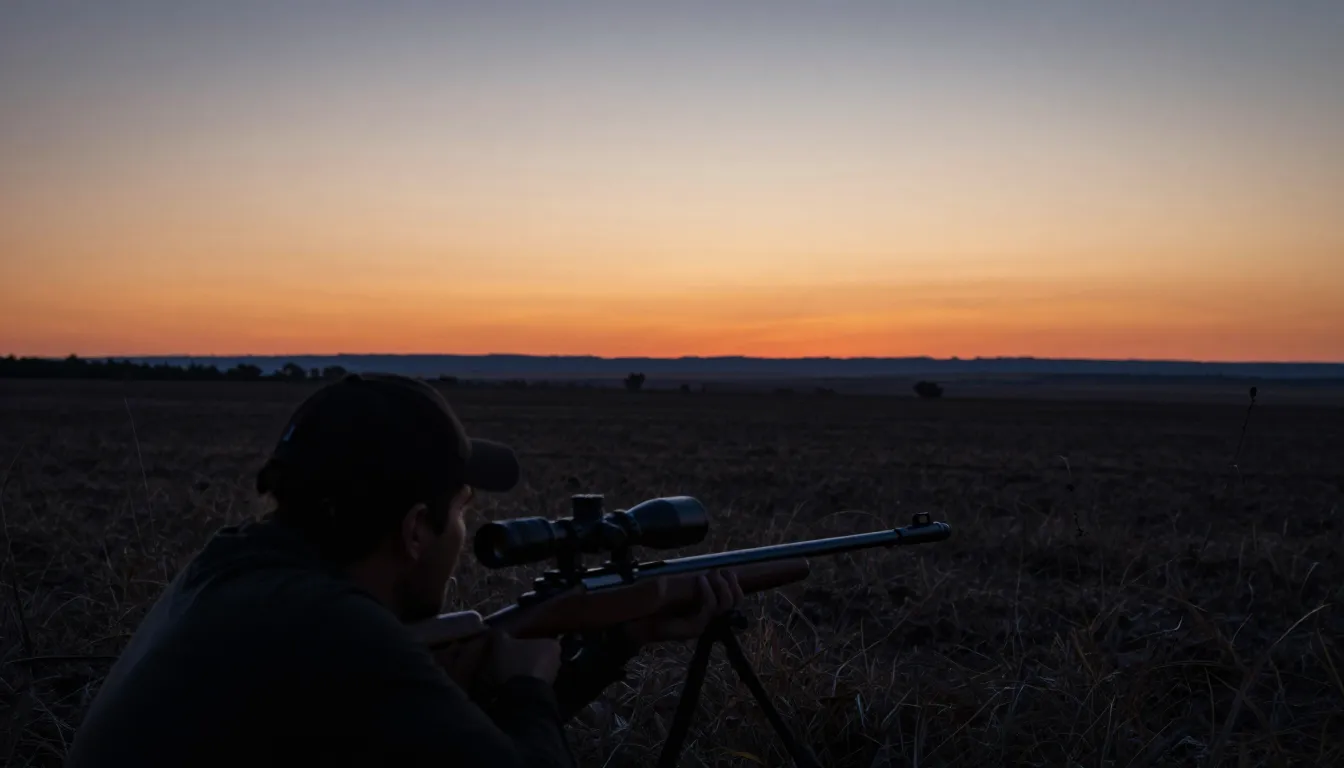
Wild hogs move at night. A thermal scope lets you see them through darkness, brush, and fog when they’re most active. These are the scopes that actually perform in the field, tested and ranked by detection range, image quality, and real-world durability.
Looking for handheld options instead? Check our best thermal monoculars guide.
Our top picks
Best overall
AGM Rattler V2 35-384
384×288 | 1,970yd detection | $3,299
The right balance of price, size, and performance for most hunters.
Best value
ATN ThOR 4 384 2-8x
384×288 | 1,230yd detection | $1,999
Most features per dollar. 16-hour battery is unmatched.
Premium pick
AGM Rattler V2 50-640
640×512 | 2,625yd detection | $4,795
640 resolution for large properties and 500+ yard spotting.
Why thermal for hog hunting
Feral hogs are nocturnal feeders. In Texas, Oklahoma, and most Southern states, the big groups come out two hours after sunset and stay active until dawn. You can sit in a blind with a spotlight, but smart hogs learn to avoid lit areas fast. Thermal changes the game because it detects body heat, not reflected light.
The practical difference shows up when you’re scanning a tree line at 200 yards. With standard night vision, a hog standing in brush is nearly invisible. Gen 3 tubes amplify ambient light, which means shadows and foliage block your target. Thermal cuts through all of it. A 200-pound sow standing behind mesquite shows up as a clear white blob against a cooler background. No amount of cover hides body heat.
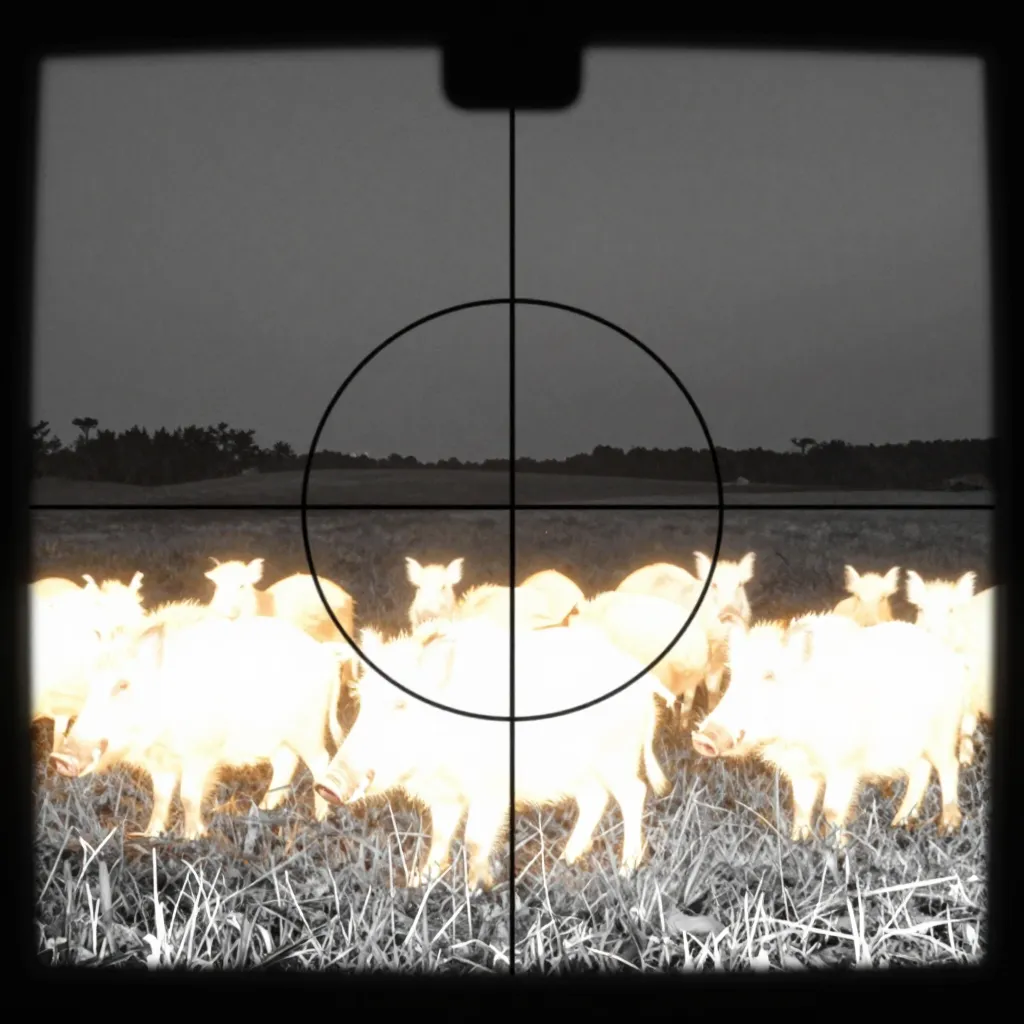
For a direct comparison of technologies, see our guide on thermal vs digital night vision. And if you’re considering traditional NV for hog hunting, check out best night vision for hog hunting.
Weather matters too. On a foggy morning or during light rain, image intensifiers struggle. Thermal sensors read infrared radiation, which passes through moisture better than visible light. Not perfectly, heavy rain still degrades the image, but you maintain usable detection in conditions that would shut down a PVS-14 or even a dedicated digital NV scope.
The tradeoff is identification. Thermal shows shape and movement, but not texture or color. At 300 yards, a hog and a deer can look similar until you study the gait. Experienced hunters learn to read body posture: hogs root with their heads down, deer browse with necks extended. Give yourself time to identify before shooting. The detection range on spec sheets tells you when you’ll spot movement. Actual shot placement depends on how well you can distinguish targets, which drops to about half the detection distance for most people.
Comparison table
| Model | Resolution | Detection | NETD | Battery | Price | Link |
|---|---|---|---|---|---|---|
| AGM Rattler V2 35-384 | 384×288 | 1,970 yd | ≤25mK | 7h | $3,299 | Check price |
| ATN ThOR 4 384 2-8x | 384×288 | 1,230 yd | <35mK | 16h | $1,999 | Check price |
| Pulsar Thermion 2 XQ50 | 384×288 | 2,400 yd | ≤25mK | 8h | $5,699 | Check price |
| AGM Rattler V2 50-640 | 640×512 | 2,625 yd | ≤25mK | 6h | $4,795 | Check price |
| Bering Super Hogster A3 | 384×288 | 1,700 yd | ≤35mK | 4h | $2,499 | Check price |
Detailed reviews
AGM Rattler V2 35-384
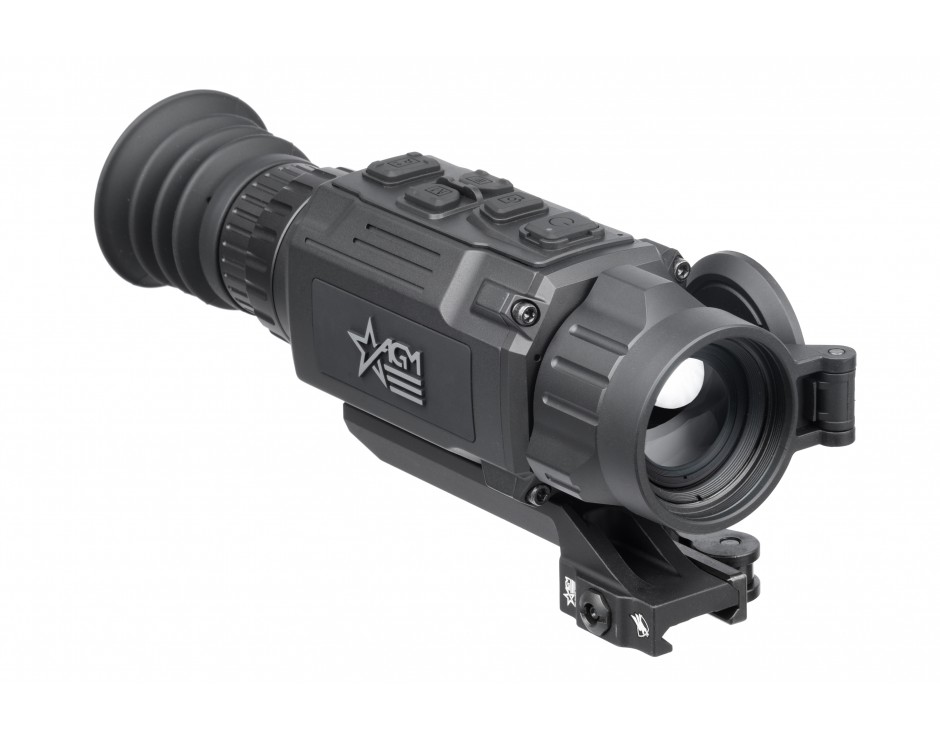
The Rattler V2 35-384 sits at the intersection of compact size and serious performance. At 1.1 pounds, it won’t throw off the balance of a .308 bolt gun, and the 35mm objective keeps the overall length manageable for truck guns or tight blinds. The 25mK NETD means it picks up subtle temperature differences, important when a hog is bedded down and its body heat is partially masked by the ground.
Detection range hits 1,970 yards under ideal conditions, though practical identification for shot placement drops to around 300-350 yards for most users. The 384×288 sensor won’t deliver crisp detail at 500+, but within 300 yards, you see enough to place shots confidently. Recoil handling is rated for .308 and 12-gauge, verified by enough field use that you don’t need to worry about caliber compatibility. Seven hours of battery life covers a full night with margin, though carrying a spare is still smart.
For an in-depth look at this model, read our full AGM Rattler V2 review.
Best for hunters who want one scope that does everything at typical hog ranges without breaking the bank or the rifle’s balance.
ATN ThOR 4 384 2-8x
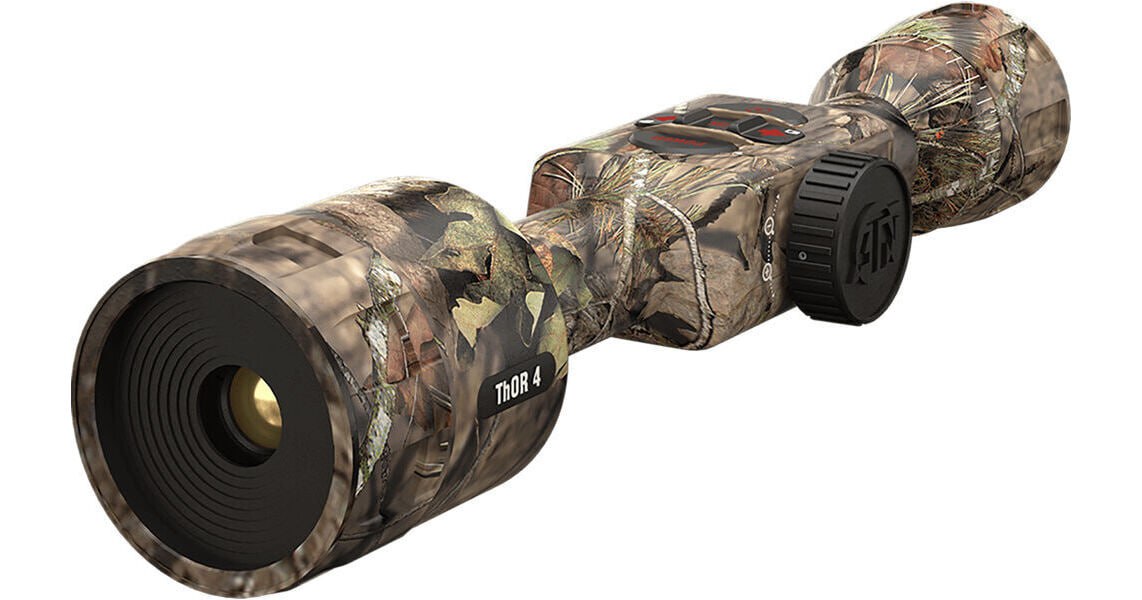
ATN built the ThOR 4 around battery life and smart features rather than raw sensor performance. The 16-hour runtime is real. That’s valuable if you’re doing extended ranch work and don’t want to swap batteries at 2 AM. The built-in video recording, WiFi streaming, and ballistic calculator add utility that no other scope in this price range matches.
The tradeoff is thermal sensitivity. At 35mK NETD versus the 25mK in premium scopes, the image loses some definition at longer ranges or when ambient temperatures are close to target body heat. Summer nights in Texas push ambient temps into the 90s, narrowing the contrast between hog and background. In cooler conditions, late fall through early spring, this matters less.
Detection caps at 1,230 yards, lowest on this list, but that’s still well beyond practical shooting distances for most setups. If your shots happen inside 200 yards, you won’t notice the difference from pricier options. The 2-8x zoom range is useful for scanning wide then zooming for confirmation.
Best for budget-conscious hunters who want modern features and don’t need extreme detection range.
Pulsar Thermion 2 XQ50
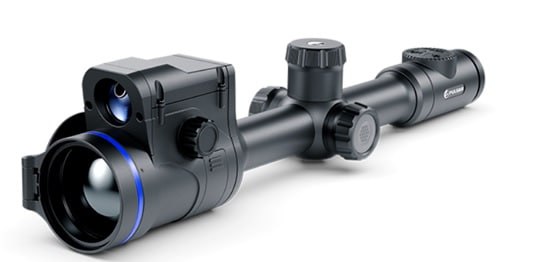
Pulsar’s reputation is built on build quality and customer support, and the Thermion 2 XQ50 reflects both. The machining is tight, controls are intuitive even with gloves, and the company stands behind warranty claims faster than most competitors. The Stream Vision 2 app works reliably for recording and remote viewing, which matters if you’re hunting with a partner who wants to watch the feed.
Performance specs put it at the top: 2,400-yard detection with the same 25mK sensitivity as the Rattlers. The 50mm objective gathers more light, giving a slightly brighter and more detailed image than 35mm units. Picture-in-picture zoom lets you keep situational awareness while zooming on a specific target, genuinely useful when multiple hogs are moving and you need to pick the best shot.
The price is the issue. At $5,699, it costs nearly $2,400 more than the AGM Rattler V2 35-384 for similar core specs. The extra money buys better build, better support, and PiP functionality, but not dramatically better detection or identification capability. Whether that’s worth it depends on how much you value the polish.
Best for hunters who prioritize reliability and support over price, or those who want PiP zoom.
AGM Rattler V2 50-640
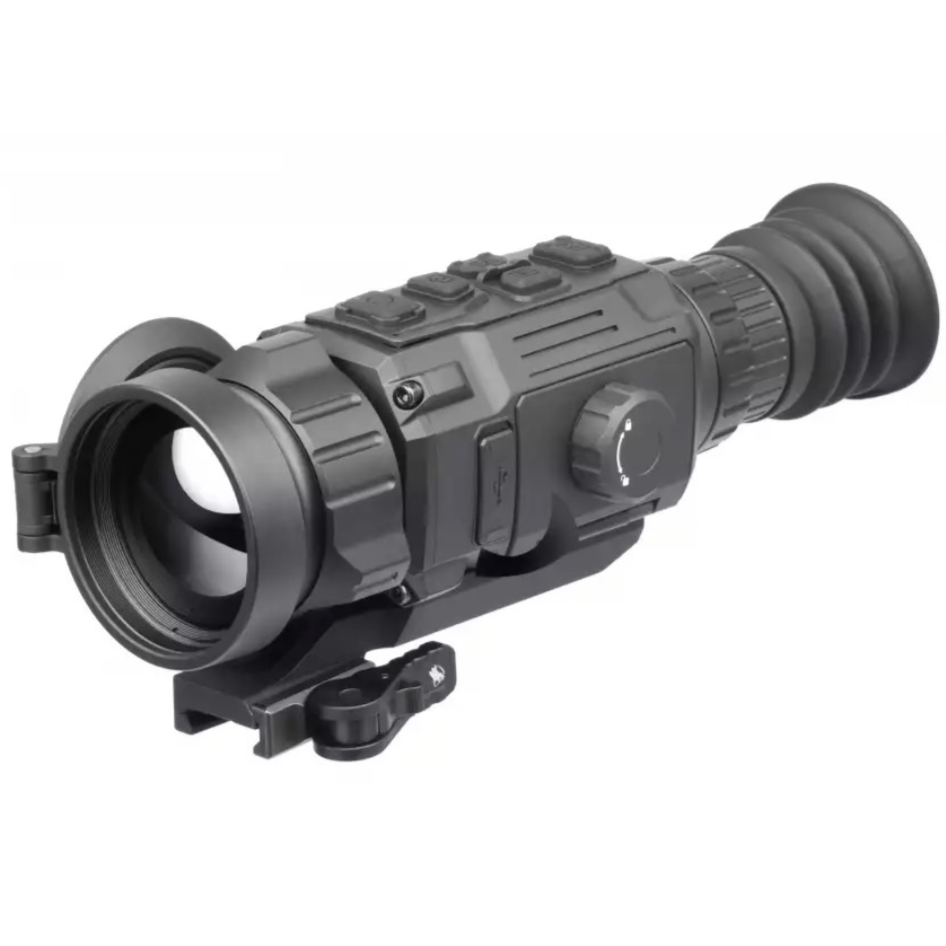
This is where resolution makes a measurable difference. The 640×512 sensor packs nearly three times the pixels of 384×288 units, which translates to clearer target definition at range. Where a 384 sensor shows a warm blob at 400 yards, the 640 lets you distinguish leg position and body posture. That matters for identification: is it a hog or a javelina? A lone boar or a sow with piglets?
Detection range extends to 2,625 yards, though you’ll realistically be IDing and shooting inside 500. The 50mm objective paired with the higher-resolution sensor means the scope performs well in low-contrast conditions that challenge cheaper units. On warm nights when ground heat bleeds into everything, the 640 still delivers usable images.
The extra capability adds weight and cost. At $4,795, it’s $1,500 more than its 384 sibling, and slightly heavier. Battery life drops to 6 hours from 7, still enough for a full night but tighter margins. If you’re hunting large open properties where shots might stretch to 400+, the investment makes sense. For dense East Texas brush where most shots happen inside 150 yards, it’s overkill.
Best for large properties, open terrain, or hunters who need positive ID at extended distances.
Bering Super Hogster A3
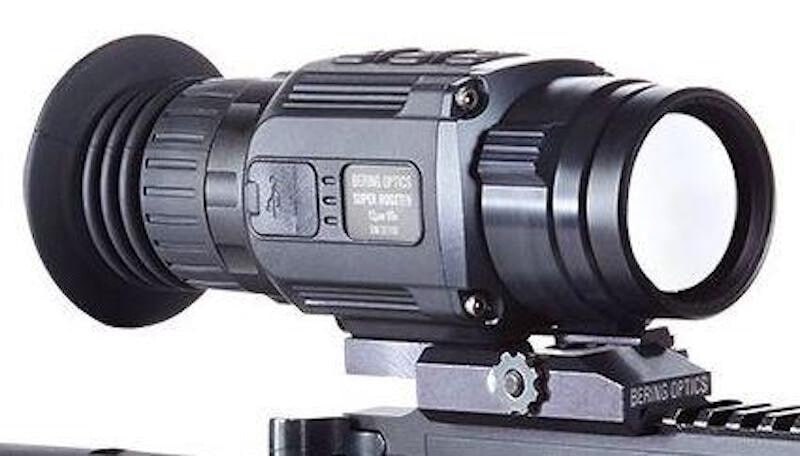
Bering built this scope specifically for hog hunting, which shows in the reticle options and menu layout. German optical engineering keeps the image clean, and the compact form factor mounts easily on AR-platform rifles without creating excessive overhang. At 2.2 pounds, it’s light enough for mobile hunting rather than just blind sitting.
The 384×288 sensor with 35mK NETD puts it slightly behind the AGM and Pulsar in thermal sensitivity. Detection range is 1,700 yards, adequate but not exceptional. Where the Hogster stands out is purpose-built design: the interface is simple, zeroing is quick, and nothing about the scope feels like an afterthought.
The weakness is battery life. Four hours means carrying spares if you’re planning extended hunts. Bering is also less established in the US market than AGM, Pulsar, or ATN, which can make parts and service slower to access if something goes wrong. The scope itself is solid, but after-sale support is an unknown quantity for many buyers.
Best for dedicated hog hunters who want a purpose-built scope from an alternative brand.
How to choose a thermal scope
Resolution and NETD are the two specs that matter most, but they work together. A 640×512 sensor with 40mK sensitivity can produce worse images than a 384×288 at 25mK if ambient conditions reduce contrast. Start with NETD: look for 25mK or lower for best low-contrast performance. 35mK is acceptable on a budget but shows limitations on warm nights or when targets are partially occluded.
Detection range specs assume ideal conditions: clear air, high contrast, static target. Cut the number in half for practical identification distance, and by 60-70% for confident shot placement. A scope rated at 2,000 yards detection realistically gives you 600-700 yard ID and 300-400 yard shot confidence for most shooters.
Battery life determines whether you need to carry spares. Anything under 5 hours means a spare is mandatory for full-night hunts. Eight hours gives comfortable margin. ATN’s 16 hours is nice but rarely necessary unless you’re doing multi-day trips without power access.
Mounting compatibility matters if you run multiple rifles. Most thermal scopes use 30mm tubes, fitting standard rings. Check eye relief: thermal scopes often have shorter eye relief than daylight optics, which can cause problems with heavy-recoiling calibers. Anything under 2.5 inches of eye relief on a .308 or larger will eventually catch your eyebrow.
Once you have your scope, you’ll need to zero it properly. See our complete guide to zeroing thermal scopes for step-by-step instructions.
Weight affects rifle balance, especially on lighter guns. A 2-pound scope on a 6-pound AR creates nose-heavy handling. Consider your rifle setup and how you hunt: standing shots from a blind tolerate weight better than stalking through brush.
Frequently asked questions
What is the best thermal scope under $2,000?
The ATN ThOR 4 384 at $1,999 offers the most capability at this price. It trades lower thermal sensitivity (35mK vs 25mK) for exceptional battery life and smart features like video recording and WiFi streaming. For pure image quality, you need to spend more.
Is 384 resolution enough for hog hunting?
Yes, for ranges under 300 yards. A 384×288 sensor delivers clear identification of hog-sized targets to about 300-350 yards in good conditions. Beyond that, you’re detecting movement but may struggle to confirm what you’re looking at. For shots past 400 yards, consider 640 resolution.
Should I get a dedicated thermal scope or a clip-on?
Dedicated scopes offer better image quality, faster target acquisition, and simpler operation. Clip-ons add weight and complexity but let you use your existing day scope. Get a clip-on only if you need to switch between thermal and magnified daylight hunting on the same rifle. For dedicated night hunting, a proper thermal scope is worth the investment.
Which thermal scope brand has the best warranty support?
Pulsar leads in customer service response time and warranty honor rates. AGM provides solid support through their US distribution. ATN has mixed reviews, good documentation but slower service response. Bering is less established in the US market.
How do I zero a thermal scope?
Same process as any rifle scope: bench rest, start at 25 yards to get on paper, then move to your zero distance. Most hunters zero thermal scopes at 100 yards. Shoot a group, adjust using the turrets, confirm. Do this in darkness or heavy shade, thermal scopes work in daylight but perform better in low-light conditions during zeroing. For detailed instructions, see our complete zeroing guide.
Final recommendation
For most hog hunters, the AGM Rattler V2 35-384 at $3,299 represents the best balance of performance, size, and value. It handles typical engagement distances (50-300 yards) with excellent image quality, fits most rifles without balance issues, and carries AGM’s solid warranty support. Unless you’re hunting large open properties where 400+ yard identification matters, this is the scope to buy.
Budget hunters should seriously consider the ATN ThOR 4 384 at $1,999. The lower thermal sensitivity is a real tradeoff, but the 16-hour battery and smart features offset it for many use cases.
If money isn’t the constraint and you want the highest resolution available, the AGM Rattler V2 50-640 at $4,795 delivers 640 capability without the extreme pricing of some competitors.
Check price on AGM Rattler V2 35-384
For proven field tactics — setup, calling, movement, and shot placement — our night vision hunting guide goes deep on species-specific strategy. Before you head out, check the night vision hunting laws by state — thermal scope use for hog hunting is regulated differently by state.
Last updated February 2026. Prices and availability may change. This page contains affiliate links — we may earn a commission if you purchase through our links, at no extra cost to you.