Thermal Scope Maintenance: Field Care That Actually Matters
I’ve put thermal scopes through enough abuse to have opinions about what actually fails and what the manufacturers hope you don’t notice until after the warranty expires. Most thermal maintenance advice online is written by people who’ve never broken anything. This comes from the other direction.
The lens issue
Thermal scopes use germanium objectives. Germanium transmits infrared radiation where regular glass blocks most of it. This material difference matters for cleaning because the anti-reflection coatings on germanium are softer than the coatings on standard optical glass. They scratch easier. They react differently to chemicals.
Do not clean the objective with paper towels, toilet paper, or tissue. The fibers scratch germanium coatings. Do not use lens wipes from your car kit, first-aid bag, or anything that contains alcohol or silicone compounds. Your shirt is not a lens cloth.
Do not use compressed air cans at close range. The propellant in aerosol cans can deposit residue on the lens surface, and hitting cold germanium with a cold propellant blast can crack coatings.
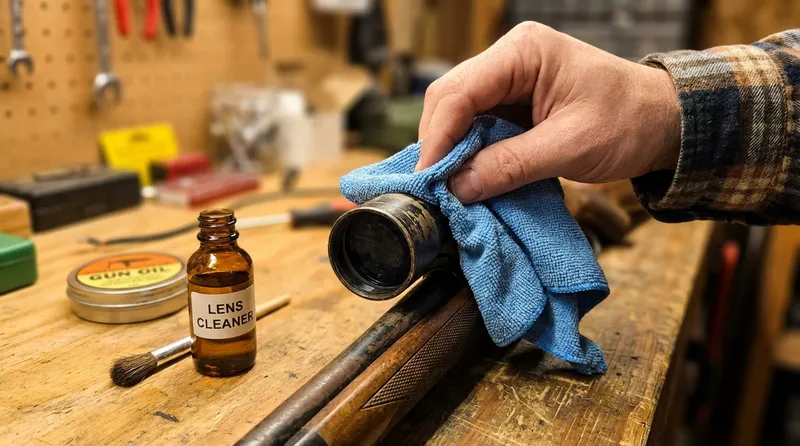
Use a lens pen with a carbon tip, or high-quality microfiber rated for optical surfaces. Light circular motion, no pressure. If there’s grit on the lens, blow it off with a bulb blower before any physical contact with the surface. A scratch on a germanium objective runs $200-$400 to replace, assuming the manufacturer sells the part separately. Many don’t.
Field dust degrades image quality faster than most users expect. Carry a lens pen in your pack. This especially applies if you’re running a clip-on thermal that mounts and dismounts frequently, because you’re handling the front of the unit every time you use it.
Batteries in cold weather
Thermal scopes draw significant current. Most run on proprietary lithium packs or CR123 cells. Both lose capacity in cold. A battery rated for five hours at room temperature may give you two and a half hours at 20°F.
The fix is simple: carry spares and keep them close to your body. Inside a jacket pocket, not in a pack on your back where they’ll cool to ambient air temperature. When you’re swapping batteries in a dark field at midnight with gloves on, you’ll understand why keeping this simple matters.
For units with proprietary battery packs, the manufacturer’s higher-capacity option is usually worth buying when it exists. The stock battery in most entry-level units is undersized. Third-party packs exist for popular units like the Pulsar Trail series. Quality varies. A failed battery mid-hunt is miserable enough that buying name-brand spares is worth the price difference.
Pull the batteries when you’re storing the unit for more than a few weeks. The internal electronics in most thermal scopes allow slow drain even when powered off. Over months, that drain kills a stored battery and sometimes damages the battery compartment.
Mounting and recoil
Thermal scopes are electronics, and electronics don’t handle repeated impact well. This matters more if you’re running thermal on a heavy-recoiling rifle, or one with a muzzle brake.
Mounting torque: 15-18 inch-pounds on ring screws is correct for most mount styles. Over-tightening deforms the tube and causes image drift or zero shift. Under-tightening allows movement under recoil. Use a torque driver. A $30 torque driver protects a $1,500 scope. This is not optional on expensive optics.
Confirming zero and understanding how thermal optics behave differently from standard scopes when zeroing is covered in the thermal scope zeroing guide, which also addresses the parallax and boresight considerations specific to thermal.
Some thermal scopes are not rated for muzzle brake concussion. The blast pattern from a brake is different from normal recoil impulse, and certain units aren’t built for it. FLIR and Trijicon publish recoil ratings. Read them before mounting on a braked rifle.
Protecting the objective
The germanium objective is the most expensive single replaceable part in most thermal scopes. The lens cap is not decoration. It goes on when you’re moving through brush, getting in and out of a truck, or doing anything other than actively using the scope. Neoprene covers and hard cases for transport keep the objective protected from the incidental impacts that happen when you’re moving in real country.
The care principles from the night vision device care guide apply here directly: protect the lens from physical contact and contamination, control moisture exposure, and keep the unit away from high temperatures. Do not leave a thermal scope on a truck dashboard in summer. The electronics don’t tolerate sustained heat above 140°F, and dashboard temps in direct sun exceed that easily.
Moisture and condensation
Most current thermal units are rated IPX6 or IPX7. Rain and brief splashes aren’t going to kill them. The actual problem is condensation from rapid temperature changes.
Bringing a cold scope indoors and using it in warm air immediately causes condensation inside the housing. It’s rarely immediately catastrophic, but repeated cycles accelerate internal corrosion. When moving from cold to warm environments, let the unit acclimate in a bag first. Same principle going back outside from a warm vehicle to a cold stand.
For thermal monoculars used regularly for scouting, the thermal monoculars buyers guide covers moisture-specific considerations for units that go in and out of pockets and bags constantly. That use pattern creates different wear than a scope mounted on a rifle and left there.
Firmware updates
This is where thermal scope maintenance differs from maintaining any traditional optic. Thermal units run firmware, and manufacturers push updates that fix bugs and sometimes meaningfully improve image processing.
Pulsar has a solid history here. Their Helion and Trail series received firmware updates that changed how image processing worked in ways that actually showed up in field use, not just benchmarks. Keep the manufacturer app installed and check for updates every few months.
Run updates in advance, not in the parking lot before a hunt. Updates occasionally have issues and you want time to troubleshoot or roll back before you’re depending on the unit. If a major version update drops right before a trip, let other users test it first and update after you’re back.
Warranty pitfalls
Most thermal scope warranties run 2-3 years. The things that end warranties quickly:
Opening anything. Disassembly voids the warranty on essentially every brand. If there’s internal fogging or debris, contact warranty service rather than opening the unit. The seal on these units matters for the IPX rating and the nitrogen purge that prevents internal condensation.
Impact damage. Warranty covers manufacturing defects, not dropping the scope. The line between a defect and an impact can be unclear, but if you drop a unit and the circuit board cracks, that’s impact damage and it won’t be covered. Document any damage that happens to the unit so you have a record if a warranty claim comes up later.
Water damage beyond the IPX rating. The IP protection is for incidental rain and splash, not dropping a unit in a creek or operating in sustained downpour.
Reputable brands — Pulsar, Trijicon, FLIR — honor their warranties and service turnaround is reasonable. Less established brands are variable. This is worth factoring in when buying a first scope, because a unit that needs warranty service and takes three months to come back is effectively not a scope you own during hunting season.

Can You Use a Thermal Scope During the Day? Daylight Use/Sun Safety and Zeroing Tips.

Night Vision Range Explained: Detection, Recognition, Identification, and Real Hunting Distance

How to Set Up an IR Illuminator for Night Vision: Placement, Beam Width, and Field Mistakes