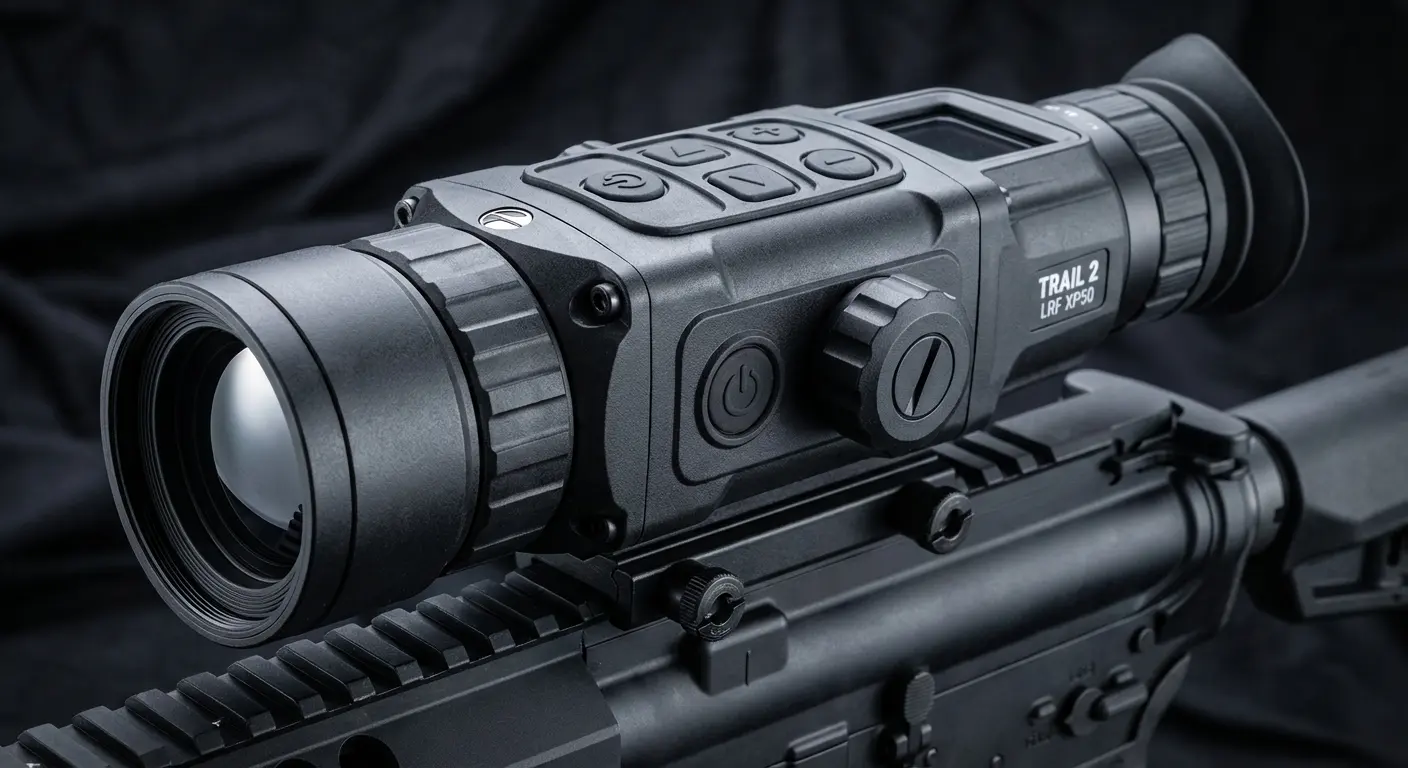
Best Thermal Scopes for AR-15 Platforms: 2026 Buying Guide
The Role of Thermal Optics on the AR-15 Platform
The AR-15 platform, chambered in calibers like 5.56 NATO, 6.5 Grendel, and .300 Blackout, is the standard choice for nighttime predator and hog hunting across North America. When pairing a thermal scope with an AR-15, specific considerations diverge from bolt-action rifle setups. Weight, base magnification, eye relief, and mount height become critical factors for maintaining the platform’s inherent maneuverability. This guide examines the most effective thermal scopes specifically optimized for the AR-15 in 2026.
Weight and Balance Considerations
An AR-15 equipped with a suppressor, a full magazine, and an illuminator can easily exceed 9 pounds. Adding a heavy, 2.5-pound thermal scope creates a top-heavy, unbalanced weapon, inducing fatigue during extended scanning sessions. According to data shared by the Texas Boar Hunters Association, operators strongly prefer thermal units weighing under 25 ounces for AR platforms.
Units like the AGM Rattler V2 series have gained traction precisely due to their compact footprint. The Rattler V2 35-384 weighs approximately 18 ounces, preserving the center of gravity. As noted in discussions regarding affordable night vision options, minimizing optic weight allows the shooter to stay on the rifle longer during multiple target engagements.
Base Magnification for Predator and Hog Hunting
Base magnification (optical magnification) dictates the field of view (FOV). For hog hunting in dense brush, a wide FOV is essential for acquiring multiple moving targets quickly. A base magnification of 1.5x to 2.5x provides an optimal balance, yielding roughly 40 to 60 feet of view at 100 yards.
Conversely, for coyote hunting in open western plains, hunters often require higher base magnification (3x to 4x) for positive identification at 300+ yards. However, excessive base magnification severely limits close-range acquisition. A user on the Predator Masters forum highlighted this: “Using a 4.5x thermal on my AR for hogs in the Georgia pines was a mistake. They bumped at 30 yards, and all I saw in the scope was a blurry mass of heat.” Choosing a base magnification must align with the primary hunting environment.
Top Contenders for AR-15 Thermal Scopes in 2026
AGM Rattler V2 35-640
The AGM Rattler V2 35-640 represents the benchmark for compact AR-15 thermal optics. Featuring a 640×512 12-micron sensor with a sub-20mK NETD, it delivers exceptional clarity in a chassis weighing under 1.2 pounds. The 2x base magnification provides a wide 12.5-degree FOV, ideal for engaging multiple hogs. The inclusion of a robust ADM quick-detach (QD) mount allows the user to swap the optic between rifles while retaining zero. The custom battery provides up to 9 hours of runtime, addressing a major complaint of older units.
Pulsar Thermion 2 LRF XL50
For users who prefer a traditional 30mm tube aesthetic, the Pulsar Thermion 2 series mounts using standard rings, allowing for customized height over bore—a critical factor for AR-15 ergonomics. The XL50 model utilizes an HD 1024×768 sensor, offering unmatched resolution. While heavier than the Rattler, the Thermion balances differently due to its elongated shape. The integrated laser rangefinder is seamlessly incorporated into the objective bell, providing distance data without altering the rifle’s profile. This unit is frequently discussed in contexts of long-range coyote engagement.
Bering Optics Super Yoter LRF
The Bering Optics Super Yoter LRF has cultivated a dedicated following due to its straightforward interface and reliable zero retention. The 3x base magnification positions it as a hybrid option, capable of both timber hog hunting and open-field predator calling. The BQ-LRF mount system is notably rigid, mitigating the zero-shift issues sometimes associated with AR-15 upper receiver flex.
Mounting Systems and Height Over Bore
The straight-line stock design of the AR-15 requires optics to be mounted higher than on traditional hunting rifles to achieve a proper cheek weld. A mount height of 1.5 inches to 1.93 inches from the top of the rail to the optical center is standard.
Quick-detach (QD) mounts are highly recommended. A reliable QD mount allows the hunter to remove the thermal scope for daytime use of the rifle with a traditional optic, or to transition the thermal to a helmet mount for scanning. High-quality mounts from manufacturers like American Defense Manufacturing (ADM) or LaRue Tactical are essential for return-to-zero capability.
Recoil Management and Sensor Protection
While the 5.56 NATO produces minimal recoil, AR platforms chambered in .450 Bushmaster or .458 SOCOM generate significant kinetic energy. Thermal scopes contain sensitive microbolometers and internal displays. When selecting a unit for large-bore ARs, verify the recoil rating. Most high-end units are rated for up to 6000 Joules (equivalent to .375 H&H), providing adequate protection for any AR-15 caliber.
Conclusion
Optimizing an AR-15 for thermal hunting requires balancing the rifle’s natural ergonomics with the optic’s specifications. The trend in 2026 leans heavily toward high-resolution (640 or 1024 class) sensors packed into compact, lightweight housings with sub-20mK sensitivity. By prioritizing appropriate base magnification and a quality QD mounting solution, hunters can maximize the capability of the AR-15 in nocturnal environments.

Can You Use a Thermal Scope During the Day? Daylight Use/Sun Safety and Zeroing Tips.

Night Vision Range Explained: Detection, Recognition, Identification, and Real Hunting Distance

How to Set Up an IR Illuminator for Night Vision: Placement, Beam Width, and Field Mistakes