Thermal Scope Waterproof Ratings Explained: IP67, Rain, Fog, Cold Weather, and Field Care
Category: How-To
Tag ideas: thermal scopes, thermal scope specs, thermal scope field care, thermal scope storage, thermal scope battery life, hunting optics, night hunting
In this article, we will discuss the meanings of thermal scope waterproof ratings, such as IP67, Rain, Fog, Cold Weather, and Field Care, as well as how they differ.
Yes, you can use a thermal scope in rain.In short – Yes! Thermal scope can be used during the rain.
In general, it is possible to use a thermal scope in the rain, but only within the limits of the scope’s model. The answer to the question "can you use a thermal scope in the rain" is actually only "model dependent. Thermal scope waterproof rating does NOT mean it’s okay to leave the optic inside a case in wet conditions, pressure-wash, charge in the storm or hunt with a loose port cover.
The IP rating which most hunters come across is IP67. Thermal scope IP67 is in field terms usually dust-tight and having passed a temporary immersion test in the laboratory, usually defined as about 1 meter for about 30 minutes. Helpful protection, but it’s not unlimited waterproofing!
Rain, snow, wet brush, dust, mud, cold air and condensation are all problems which are common to the hunter. Different problems include open USB-C ports, broken seals, drowned rifles, saltwater and bad storage. To hunt at night during rain weather with a waterproof thermal scope, the key is to purchase the appropriate rating, follow the instructions, and maintain the waterproofing of the optic post-hunt.
Waterproof Ratings explained on a Thermal Scope.
Waterproof, weatherproof, water resistant, fogproof and rugged doesn’t necessarily mean the same. Certain terms are marketing jargon. Some are attached to a particular ingress protection test. The most important spec is generally the IP rating.
IP is an acronym for Ingress Protection. The first digit is usually associated with solid particles like dust. The second digit is for water. When a side is not designated by the code, for example in IPX7, it is coded as X. Does not necessarily mean protection is not afforded there for the scope.
This is important, as a thermal scope is an electronic optic. It includes a sensor, display, battery system, control buttons, lens assemblies, seals, and sometimes charging or data ports. Water doesn’t need to be in the entire residence to cause trouble. Moisture around contacts, buttons, ports or at the battery door is sufficient.
Practically, that’s the difference between the terms thermal scope waterproof and water resistant. Light rain/splashes may be handled by a water-resistant optic. When it’s a defined IP rating, you have a better sense of the boundaries. Consider that line a "Do Not" line, not a challenge.
IP Ratings Explained: IPX, IP66, IP67 and IP68.
The common ratings of hunting optics are easy to translate:
- IPX rating: X indicates that the missing side was not specified. IPX7 doesn’t refer to dust protection.
- IP66 – dust-tight and resistant to strong jets of water under test conditions. Still, it doesn’t imply that you should pressure wash the scope.
- IP67: Dust-tight and temporarily protected against water under specified conditions. This is the common IP67 thermal scope reference point.
- IP68: Dust-tight, with a higher immersion claim than IP67, but the manufacturer needs to specify the depth and length of immersion.
Don’t think that every water test is ideal for real life. A scope that has been rated for temporary immersion does not necessarily mean it is rated for wet charging, open ports, multiple mud dunkings or years of storage abuse. Where the manual specifies that caps must be closed, the rating assumes that they are closed.
Thermal Scope Rain Use: What’s Typically OK
Normal rain use would be walking to a blind, sitting on a tripod, a feeder, or calling coyotes from a field edge. Moderate rain is generally okay if the optic is rated for it, the caps fit and the scope isn’t damaged.
The risk increases when rain exposure turns to water abuse. It is different from hunting in the rain than dropping the rifle in a ditch, setting the scope on wet mud, letting water sit in a case, or riding around with the scope uncovered in heavy spray.
When people wonder "can thermal scopes get wet?" let’s ask the more important question: "Can that specific scope model get wet in that specific way? It’s one thing when a thermal scope is sealed and it rains. Another is if someone leaves a USB-C cover out in the rain.
Before a wet hunt:
- Inspect any caps, battery doors or port covers.
- Don’t leave the objective unguarded until you are prepared for hunting.
- Avoid laying the rifle optic-down in wet grass.
- Avoid letting cables/ports get exposed to rain.
- Dry scope prior to return to case.
See USA Night Vision’s thermal scope maintenance and field care for a comprehensive routine.
Fog, Humidity, and Condensation
Thermal scope fog can have two different meanings. One is that moisture may condense on the outer lens surface. Second, due to fog, humidity, wet vegetation and warm ground the thermal contrast may be reduced, which can make the image appear flat.
A thermal optic constructs an image on the basis of temperature differences. If it is a damp warm night, the animal and the background temperature might be nearer each other than if it was a dry cold night. Even if the image is not as crisp, the scope might be fine. Here, it’s focus, NUC, palette, brightness, contrast, NETD and processing. Those limits are explained in USA Night Vision’s guides to thermal image settings, NETD, and NUC calibration.
Be careful of the thermal scope condensation. This has been known to occur when a cold optic is brought into a warm truck, cabin or home. Moisture on the outside must be dry prior to storage. If you ever notice water inside the optic, don’t assume that it is a normal settings issue and contact the manufacturer or dealer.
Since the cold weather conditions are not ideal, you need to take into account the operating temperature.
Thermal scope operating temperature is the operating temperature range that the manufacturer expects the optic to operate. Typically thermal scope storage temperature is a separate spec. Don’t assume that they’re the same number.
Cold weather has an impact on batteries, displays, buttons, rubber covers and cables. If a scope is stored in a cold truck, it may require some time before it is adjusted to better look at the image. Batteries also lose some of their effective hours in cold weather conditions, particularly when on a long coyote stand, or late night hog hunt.
The basic rules of thermal scope battery cold weather planning are: Start fully charged; Bring an extra battery along if you can (thermal scope systems); Protect external power sources from the weather. _route cable prior to hunting; if using an external battery, verify in manual that it can be used in wet conditions. The USA Night Vision thermal scope battery life guide 2026 delves more into battery life planning.
Ports, Caps, External Power and Water Exposure: The area where the ports, caps, external power and water access are located.
Damage can be caused by hunters in a preventable manner at ports. A thermal scope USB-C port water issue can be caused by the use of an external power source in the wrong weather, a rubber cap that is only partially closed, or a wet cable that is inserted into the water port.
Not all brands permit charging, video transfer, data transfer or outside powering when wet. Some IP ratings are only valid when all covers are closed. These accessories may compromise weather proofing by creating an opening.
When using external power, check the manual to make sure it is compatible with the specific model, make sure the port cover is not damaged, route the cable so that water does not run towards the power port, and keep the power bank dry. It’s great to have the recording and app features, but it’s not worth wrecking the optic in a storm. Refer to the thermal scope video recording, Wi-Fi, apps, and RAV guide for related feature planning.
When it rains, snows, dusts, or muds, first aid takes place in the field.
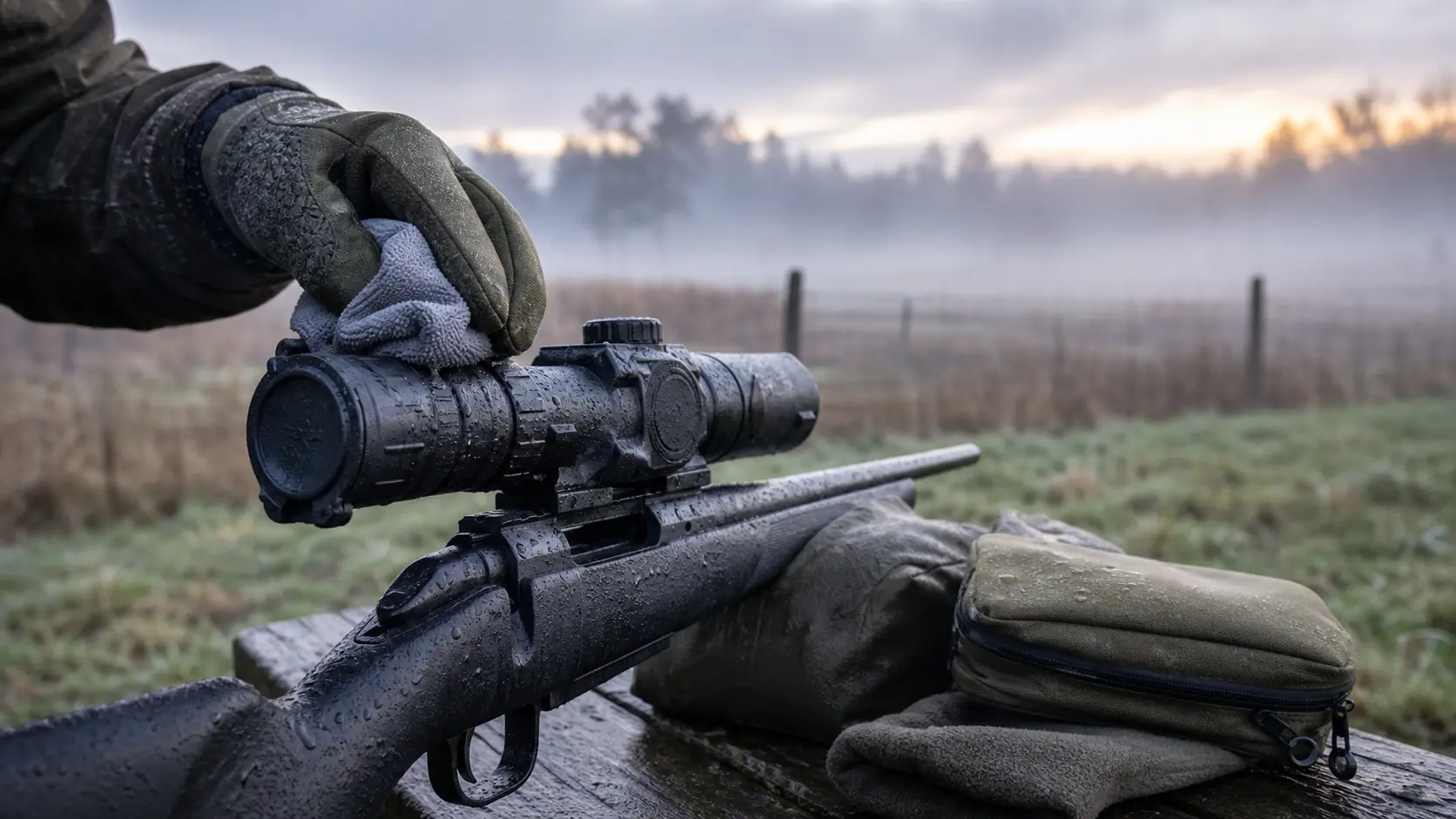
Thermal scope field care is common discipline. Following a wet hunt, first make safe the rifle, then wipe standing water from the housing, dab about seams and buttons, and allow exterior to dry prior to storage. Avoid pushing water in with heavy wipe down of controls.
Clear away any loose dirt or debris (except dust or mud) prior to contact with the lens. Apply optic-safe cleaning techniques. Avoid scraping the lens coatings and pressure washing. Grit protection is useful in dry ranch environment but grit may still work into moving covers and cause damage to lenses.
In addition to the thermal scope maintenance following the rain, check the port and battery-door. If the optic was hit hard, submerged beyond its rating or does not work as expected after being exposed to water, record the incident and contact support.
Storage Errors that Can Ruin Thermal Scopes.Storage Errors that Can Ruin Your Thermal Scopes.
It is during storage that many weatherproof optics get hurt. Even if it is a waterproof thermal scope, it can still take a beating after being hunted and put away while it was still wet.
Avoid these mistakes:
- Putting a wet scope in a foam or soft case.
- Hot trucks which the optic is in for extended periods of time.
- Transferring a chilled damp optical into warm air and closing to prevent drying.
- Storage with dirty battery contacts.
- Failure to remove batteries as per manufacturer’s instructions.
- Failure to monitor or replace damaged or loose port caps.
Drying wet electronics is NOT a case. If the hunt was wet, dry the scope first. Clean around controls and covers if it was dusty, before the dust hardens. Mounting and Transporting: Refer to how to mount a thermal scope.
Before purchasing a weatherproof thermal scope, there are certain factors to consider.Before buying a weatherproof thermal scope there are some items to check.
Ignore the term "waterproof" when comparing scopes. Be sure to read the precise rating, and what the rating is contingent upon.
Look for:
- Stated IP rating, such as IP66, IP67, or IP68.
- Operating temperature range.
- Storage temperature range.
- Design of port cover and battery-door.
- Manual rules for external power and charging.
- Cleaning and drying instructions.
- U.S. dealer or manufacturer assistance.
- Guarantee phrases relating to water damage and misuse.
Carefully read the thermal scope warranty water damage language. Many warranties will include only defects – damage caused by open covers, misuse, impact, disassembly or exposure outside the rating may be treated separately. Not all brands use terms the same.
When you are purchasing your first optic use this spec in conjunction with sensor, lens, battery, mount and image quality. If you are looking for a first thermal scope, USA Night Vision’s guide how to choose your first thermal scope is a good place to get started.
Hunting Scenarios… How much Weather resistance is required?
Feeder and Stand Hog Hunting
If you are walking from a truck to a blind and hunting under cover then a solid weatherproof thermal scope with closed caps may suffice. Humidity and condensation are factors but rain exposure is minimal.
Open-Field Coyote Calling
Predator hunters endure wind, sleet, wet grass and speedy temperature changes. I would like a clear IP rating and battery planning that is reliable in cold weather and controls that I can work with gloves.
Ranch and Property Use
Ranch users must be able to move within and between trucks, gates, barns, feeders and dusty roads. As well as rain protection, thermal scope dust protection is important. IP67 is appealing here, however, habits in the room factor into reliability.
Range Practice
The best time to try out the port caps, menues, external power routing, start up characteristics and drying routines is on a range day prior to the hunt.
Common Mistakes
The first error is believing that IP67 denotes indestructible. It does not. It is a rating for the test, not a lifetime abuse guarantee.
The second error is using outside power in wet weather, without consulting the manual. It can all change with one port being exposed.
The third error is when wet gears are sealed in a case. While the hunt itself can be made rain-proof, it won’t be rain-proof once the moisture has been trapped.
The fourth error is when image loss is equated with water damage due to humidity. Before accusing the hardware, check focus, NUC, palette, brightness, and contrast for the thermal scope in rain.
The 5th mistake is having neglected cold batteries. The colder the weather, the shorter the run time so plan for power in advance of the stand.
Before and After Wet hunts Field Checklist.
Before the hunt:
- Check the scope’s IP rating and manual range.
- Review Battery charge and Cold weather run time plan.
- Check port caps, battery covers and seals.
- Determine if external power is suitable.
- Clean microfiber cloth and dry storage option.
- Turn the optic on with time to allow it to stabilize.
- Focus and run NUC before shot window.
After the hunt:
- Make safe the rifle.
- Remove rain, snow, mud and dust.
- Dry around control(s) and cap(s).
- Check Ports before Opening.
- Do not close the scope in a case until it is dry.
- Recharge only when the port and charging area is dry.
- Find out if there is abnormal behavior prior to the next hunt.
Final Takeaway
Thermal scope waterproof rating is a buying filter & field use guide. It provides some useful information on dust and water resistance but will not supersede the manual or sound judgment.
Thermal scope IP67 is an excellent practical rating for most hunters for the protection from rain, dust, wet grass and regular field use with covers closed and the optic properly cared for. Does not imply unlimited submersion, wet charging, pressure washing, or careless storage.
When hunting for hogs, coyotes, or ranch property in real weather, purchase a weatherproof thermal scope that is clearly rated as such, check operating and storage temperatures, cover the port(s), manage batteries in the cold, and clean the optic after a wet hunt. The scope which lasts is not always always the scope that has the best rating. It’s the one used by a hunter who respects the limits.

Can You Use a Thermal Scope During the Day? Daylight Use/Sun Safety and Zeroing Tips.

Night Vision Range Explained: Detection, Recognition, Identification, and Real Hunting Distance

How to Set Up an IR Illuminator for Night Vision: Placement, Beam Width, and Field Mistakes