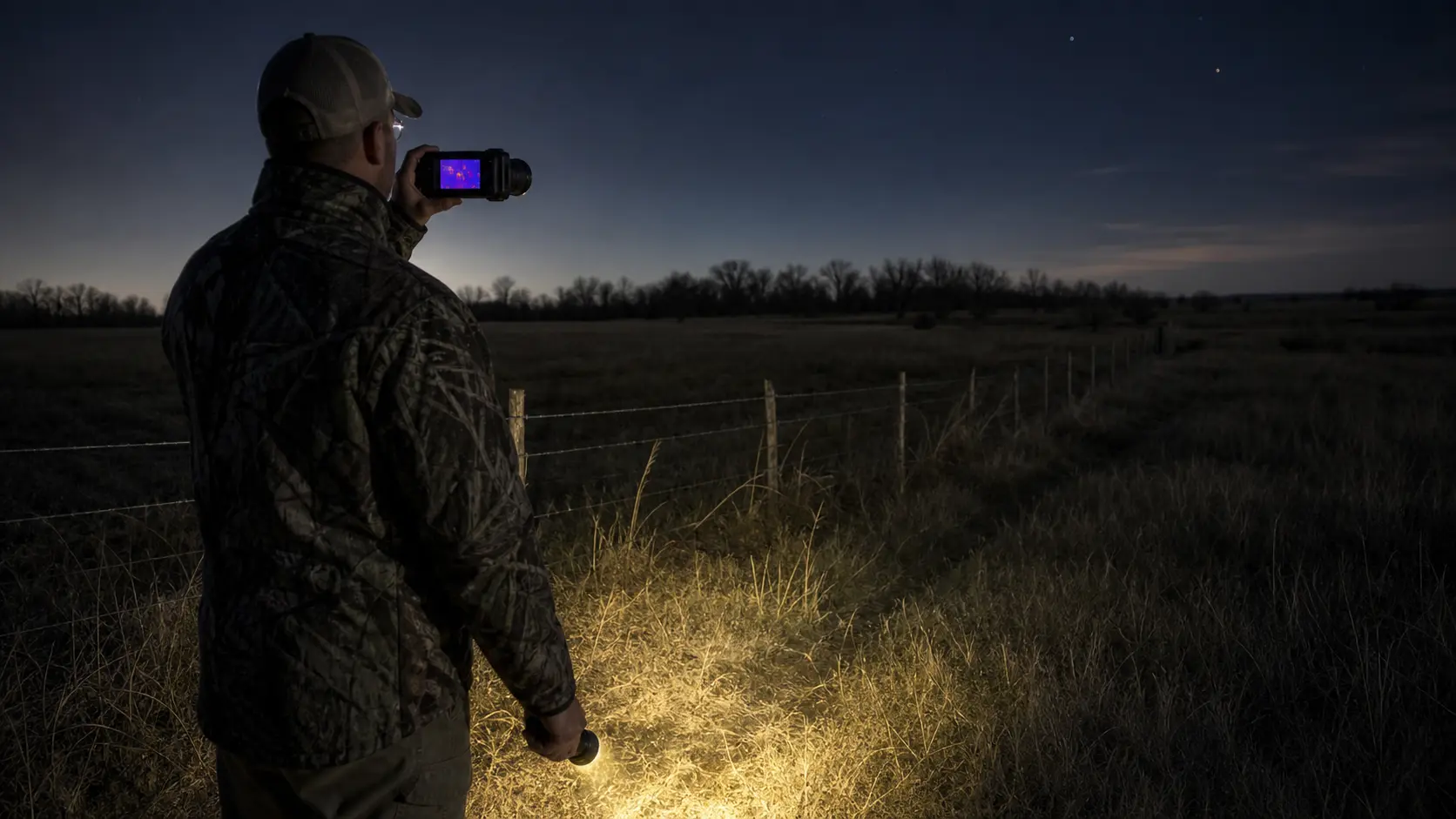
Can Blood be tracked with a Thermal Scope? Heat Signatures, Recovery Limits and Night Hunting Safety
Can a Thermal Scope Detect Blood?
After a night shot, a thermal scope may help, but the name of the game is not blood, it is heat contrast. Thermal scope blood tracking is actually the search for a warm animal, a recent disturbance or a suspect heat signature. A hunting thermal cannot recognize blood as a substance, and it is not able to see a red color when a flashlight is turned on.
That distinction matters. Thermal is a tool that can be used effectively to conserve time, and ethically retrieve game. When misused it can be used to give false confidence or push the hunter into unsafe muzzle scanning using a weapon mounted optic.
The short answer is: it tracks heat better than blood.
Consumer hunting thermals use infrared energy and convert heat variations into a visual image. FLIR’s technical description of thermal imaging is helpful at this point: thermal imagers construct images based on heat, not light. Thus, the question is, can thermal scanners detect blood? If the exposed blood is warm, pooled and resting on a contrasting surface, there may be a short duration of thermal difference in the new blood. But that window is short and inconsistent.
Reliability is a function of temperature, surface, volume, time, rain, vegetation, wind, humidity, and sensor quality. Very small drops cool quickly. Grass is cool when it is wet. The warm soil, rocks, stubble and brush can be distracting. A better sensor might allow more detail, but it can’t guarantee a clean thermal imaging blood trail.
Thermal can assist you in locating the animal after shooting.
A thermal scope post-shot placement can help you find:
- An animal that has been lying in grass, brush, ditch or fence line, that is warm.
- A moving animal that is injured and moving through cover.
- Recently disturbed bedding cover or flattened grass.
- Warm tracks in rare conditions: very fresh movement, cold ground, close distance.
- Heat trapped in vegetation, where the animal stopped or crashed.
Detecting does not equal confirming. Downed hog, calf, warm rock, stump, bedded deer, person or sun-warmed brush can all be bright spots. When a thermal hit occurs, treat it as a clue until regular tracking sign confirms this.
What Thermal Usually Cannot Do Reliably
As per the field question: can thermal see blood on the ground, the honest answer is: not reliably enough to rely on. Thermal tends to have trouble with thin blood, old blood, blood under grass, wet vegetation, rain washed sign, warm dirt and heat holding rocks or soils.
Thermal also will not penetrate the ground or foliage. It may be impossible to spot a wounded deer over a rise, a hog in a wash, or a coyote behind thick cedar until you change angle. In these instances, the use of thermal imaging for hunting recovery should be used to supplement tracking skills – not replace them.
Thermal Scope or Handheld Thermal Scanner for Recovery
The rifle mounted optic is designed to point. A scanner has been designed to search. The difference is crucial during the night recovery.
The Problem With a Weapon Mounted Scope for Search
Use of a rifle mounted thermal, as binoculars, presents a muzzle-safety issue. With each scan, there is a possibility of sweeping roads, houses, or vehicles, livestock, partners, other hunters or neighboring property. State hunter-safety guidelines always stress the importance of muzzle control and identifying your target and what lies beyond it. Michigan DNR also explicitly states that scopes are not to be used as binoculars.
That’s why thermal scope safety hunting practices are as important as image quality. There is a lot of uncertainty during night recovery. Do not use your optic to drag your muzzle over the terrain if you don’t know it.
There are occasions when a Thermal Scope can still help.
A thermal scope can be beneficial from a controlled and known safe position with a known safe direction and backstop. It can be helpful to re-check the area of the shot, observe the last known route or confirm a heat signature prior to making a safe approach. Some hunters unload or make the rifle safe before making a quick look if local rules and their firearm handling procedure permits. Obey the training and property rules and practice current state regulations.
Why a Handheld Thermal Monocular Is Better
A handheld thermal scanner for hunting is typically the more advantageous recovery device since it separates searching from aiming. A thermal monocular for blood tracking is not going to reveal the blood for you, but it allows you to scan the edges of a field, ditches, gaps in fences and brush lines without pointing a muzzle. It is quicker, less fatiguing, safer to do with a friend and easier to navigate gates, roads and livestock.
Next up in the queue for tool selection is USA Night Vision’s guide on thermal scanner vs thermal scope night hunting for tools.
A Safe Night Recovery Workflow With Thermal
Step 1: Plot the shot location and direction of last observation:
Prior to moving, indicate the position of the shooting point, the position of the animal and the last direction of the animal that was seen. Record the note range, landmarks, GPS pin, wind, angle of shot, animal reaction and crash/splash/grunt/brush sounds. When distance judgment via thermal is in the mix, check out thermal scope range estimation.
Step 2: Wait before pushing animal.
Don’t make every recovery a chase. Right wait will vary by species, hit quality, terrain, weather, guide or landowner rules and local ethics. Steer clear of blanket wait time commitments. A well disciplined stop can stop sending an injured animal further.
Step 3: Scan From a Safe Position
Use the safest vantage point. When feasible, use a handheld scanner. Process: Last known direction, Field edges, Trail, Water, Bedding cover, Low spots, Brush lines. Take it easy and rest frequently. If you only have a rifle mounted thermal then use it only in a safe direction and carry the rifle as you have been trained.
Step 4: Choose White Hot / Black Hot and Adjust Contrast.
Switch palettes. White Hot can stand out in open pasture, and Black Hot can create shapes in brush. Reduce brightness to prevent a washed out night vision, adjust contrast and don’t go straight to the high digital zoom. Excessive zooming will make the area of view too small and may make the animal disappear from the screen. Check out USA Night Vision’s guides to thermal image settings and thermal scope digital zoom.
Step 5: verify with frequent checking sign
Thermal should guide you to potential areas of interest. It should not replace tracks, hair, blood, disturbed grass, broken stems, smell, sound or partner observations. Circle all the known signs. When you lose the trail, go back to the last point where you know that you are on the trail, rather than wandering around.
Step 6: The most critical thing is to stop if conditions become unsafe.
Stop if the search leads to a house, road, animal, unknown backstop, property line, dense brush, or a wounded animal that you can’t approach safely. Never trespass on other people’s property. If it’s beyond your safe reach, contact the land owner, guide, game warden, or legal recovery assistance in the area.
Various factors can influence the effectiveness and feasibility of thermal recovery.
Cold Nights vs Warm Ground
Cooler nights are helpful because warmer animals provide a contrast to colder ground. After a hot day dirt, rocks, sand, pavements and crop residues can still be hot for hours on warm ground, hurting contrast.
Fog, rain, humidity and wet grass.
Rain and wet grass decrease the blood sign and diminish the thermal contrast. Fog and humidity may compromise distance visibility. Waterproofing will not make Blood Tracking reliable, it only will protect the optic. Check the weather expectations on thermal scope waterproof ratings.
Brush, Tall Grass and Terrain.
Thermal is line-of-sight. An animal can be concealed in areas of tall grass, cedar, mesquite, ravines, creek banks and terraces. Field of view is important when searching, and this is why thermal scope field of view is important.
Time interval between shots.
Heat clues fade. There is a cooling of the exposed blood, a leveling of the disturbed ground and when the animal dies, a gradual equalization of body heat with the surroundings. Ethically the right answer may be to wait, but if that’s the case, make sure to record the details right away and don’t rely on your memory later.
Common Mistakes Hunters Make With Thermal Tracking
Assuming Every Bright Spot Is the Animal
Think before you act; check the shape and location, and check movement and context.
Scanning too fast or at too high digital zoom level
Quick panning blurs details. Digital zoom narrows the search as it zooms in to an image. Look for leads first, then zoom in on a lead.
The dangers of not remembering muzzle safety when using weapon-mounted optics.
Rifle scope is not a scanning device. Do not sweep at people, buildings, roads, livestock or unknown ground and keep the muzzle in a safe direction.
Ignoring Regular Blood Sign and Tracks
Ground sign is the only way to confirm a thermal hit. The trail remains a significant factor.
Crossing Property Lines Without Permission
Ethical recovery is not in lieu of trespass law. Don’t enter the property without permission or knowledge of the rules.
Thermal helps you when you need it the most.
Open fields and pasture edges.
When the open ground provides a clear field of view for the sensor. Often the best thermal recovery environments are pasture, hayfields, senderos, and cutovers.
Fresh shots on cool nights.
Fresh heat contrast on a cool night is the best case for thermal detection.
Hog and Predator Recovery in Known Terrain
The best time to use tracking wounded hog with thermal or recovering predators is when you are familiar with the property and cattle locations, roads, backstops and likely escape routes. Wounded hogs can be dangerous, maintain distance and communicate.
Partner Work: One scanner, one light, one rifle kept safe!
There are basically 3 rules to a good team workflow: Use one scanner, only one light for the ground sign and only one rifle, which is handled safely and only used if there is a safe and legal need for it.
When Thermal Is Not Enough
Sparse Blood, Heavy Rain, and Warm Ground.
Blood cools rapidly when it is sparsely distributed. Sign is washed away during heavy rain. A warm ground will cause false positives.
The habitat is dense brush or terrain prevents the animal’s movement.
Brush and terrain can obstruct the view so that thermal does not see the animal until the animal’s angle changes.
Legal restrictions for the search direction or unsafe search direction.
Not all states and species have the same night hunting, artificial light, thermal equipment, tracking dogs, dispatch or after hours recovery. Check current regulations. This article is meant as practical guidance, not legal advice.
There are times when a Trained Tracking Dog or a local Recovery Help is the better choice.
A trained tracking dog (legal) or experienced recovery help in the area may be more effective than more wandering (with thermal) for marginal hits or lost trails. In Louisiana, its wildlife agency talks about tracking dogs in an ethical recovery plan specific to that state; other states vary.
Quick Checklist: Thermal Recovery After a Night Shot
- Mark location of shot, impact point and last known direction.
- Make the gun safe and keep the muzzle in a safe direction.
- Wait for hit quality, species and local guidance appropriately.
- When possible, use a handheld thermal scanner to scan first.
- Rifle mounted thermal is only to be used in safe, controlled directions.
- White Hot / Black Hot and Brightness and Contrast.
- Check with tracks, hair, blood, disturbed grass, sound and smell.
- Talk with your partner clearly before moving.
- Respect property boundaries, roads, homes, livestock and backstops.
- Stop and call for help if conditions become unsafe and/or legally unclear.
FAQ
Will a thermal scope detect blood on grass?
A short thermal difference may be seen in some instances with fresh exposed blood, but a thermal scope will have an unreliable ability to detect blood on grass. Find heat signatures using thermal and verify with visible sign.
Is it possible to detect a wounded hog using thermal imaging?
Yes, thermal imaging can be useful for finding a wounded hog particularly on cool nights in open fields or at the edges of pastures. Not guaranteed in rain, warm ground, broken terrain or thick brush.
Is thermal better for recovery than a flashlight?
Thermal is superior in finding heat in the dark. When reading blood, hair, tracks and ground sign, use a flashlight. Both are used in the best recovery.
The rifle mounted thermal, should I use it to scan for a downed animal?
If possible, use a handheld thermal monocular. Firearm safety and local rules should be observed with a rifle mounted optic from a controlled position with a safe direction and backstop.
Can thermal blood tracking be washed away by rain?
Blood can be washed away by rain and this can lessen the thermal contrast. It is not an absolute “clue remover” but definitely makes thermal blood tracking less reliable.
Which palette is best to use for tracking after a shot?
No one has the best universal palette. Use White Hot or Black Hot, use both, lower brightness, adjust contrast and don’t over-use digital zoom during the initial search.

Can You Use a Thermal Scope During the Day? Daylight Use/Sun Safety and Zeroing Tips.

Night Vision Range Explained: Detection, Recognition, Identification, and Real Hunting Distance

How to Set Up an IR Illuminator for Night Vision: Placement, Beam Width, and Field Mistakes