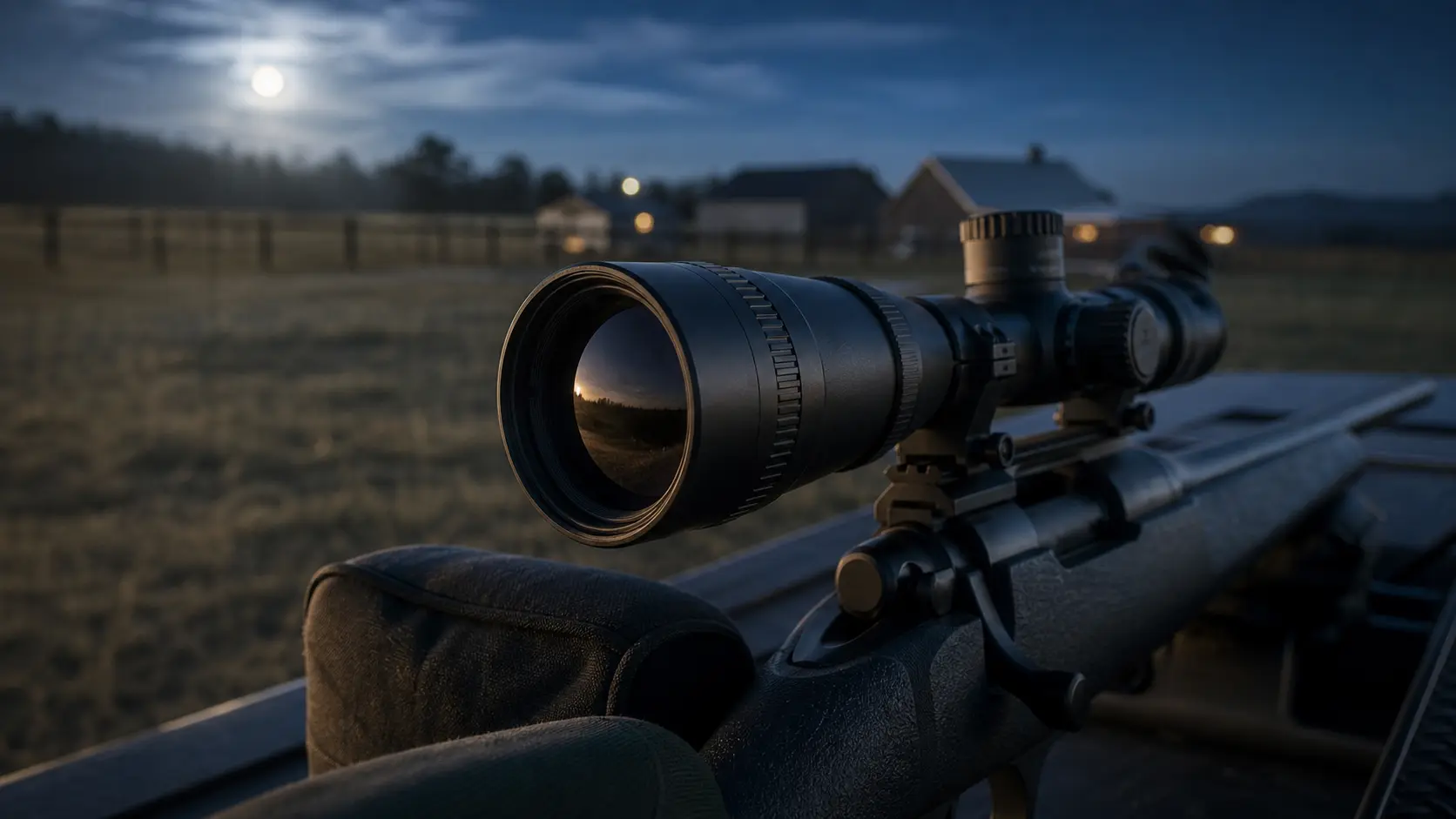
Thermal Scope Lens Size Explained: 25mm vs 35mm vs 50mm for Hunting
When comparing thermal scope lenses, one of the first features that the hunter will consider is the size of the lens while one of the easiest to oversimplify. So a 50mm thermal scope is certainly more significant than a 25mm thermal scope. It is in some terrain. On other terrain that larger lens may provide too much base magnification, a narrower field of view, increased weight and a slower shooting rifle.
Lens size is not a trophy number in the field. It’s a good fit. The objective lens on a thermal scope is dependent on the location you hunt, distance that you must identify animals, frequency of scanning with a rifle, and the specific problems that you encounter on the ranch, whether you are hunting for hogs, coyotes or general ranch issues.
Quick Answer: What Thermal Scope Lens Size Should Most Hunters Choose?
A 35mm thermal scope is an ideal size for most hunters. Typically offers a realistic combination of field of view, detection potential, base magnification, weight and price. When discussing one primary thermal for a first-time rifle hunter to use for choosing a thermal for mixed hog/coyote hunting, I would begin the discussion with the 35mm class.
A 25mm thermal scope is suitable for short range hunts, feeders, timber hunting, brush lines, lighter rifles or budget-first hunting. Scanning with a close distance is often easier because it can be wider and have a lower base magnification.
For a 50mm thermal scope, you can expect to use it in open fields, longer observation lanes, crop country, and advanced hunters who can adjust their field of view and magnification to a smaller level. It can aid with the scope’s range but is not necessarily the best size lens for use in a hunting scope.
The size of the lens is just one of several components. The resolution of the sensor, the NETD, the base magnification, the quality of the display, the focus, the image processing, the stability of the mount, the refresh rate, the battery life and the legal target identification are all important.
What Does Thermal Scope Lens Size Mean?
The size of thermal scopes is typically specified by the size of the objective lens and/or by the focal length class, typically in the form of 25mm, 35mm or 50mm. This could be referred to as the objective lens but should be interpreted as an optical class which affects the FOV, base magnification, and range potential.
Objective Lens Size in Simple Terms
The objective lens captures and concentrates the infrared radiation to the thermal sensor. A larger lens, although it will have more range potential and a different optimum optical design, will not dictate ALL performance.
Imagine that thermal scope lens size is one of the ingredients. It applies to sensor, pixel pitch, focal length, aperture, processing, display and software. A good 35mm unit can be more effective than an inadequate 50mm unit.
Lens Size vs Sensor Size vs Display Size
Size of the lens is not equal to the resolution of the sensor. The resolution of detectors is given in terms of 384 and 640 sensor. The objective class is indicated by a 25mm, a 35mm or a 50mm objective. Another separate spec to display resolution.
It is here that things get muddled up for buyers. Doing this does not transform a 384 sensor into a 640 sensor, either. Even a 640 sensor does not guarantee that a narrow high mag scope is a comfortable fit in the tight timber. If you are in the process of deciding on a sensor class, check out USA Night Vision’s thermal scope sensor size guide and the 384 vs 640 thermal scope comparison.
How Lens Size Changes Real Hunting Performance
If any thermal scope specs are not explained well, it’s always going back to the field. The size of the lens impacts on range potential, field of view, base magnification, rifle handling, and orientation when animals are moving.
Detection Range
A bigger thermal scope objective lens can help detection range, but use this term with caution. Detection is simply realizing that there’s something warm out there. Recognition is understanding the general type of object. Identification is the process of confirmation, so that an ethical and legal decision can be made.
Those are other measurements. Coyote, calf, dog, deer and hog detection numbers do not equate to the distance at which you will be able to identify the animal. USA Night Vision fills in that difference in its blog post on detection vs recognition vs identification range for thermal scopes.
Field of View
The many buyers learn the hard lesson about thermal scope field of view. Bigger lenses are likely to have a higher base magnification, but at the same time will have a narrow view. This could be okay on open pasture. Friction in woods and creek bottoms, feeders and near senderos.
A broad field of view thermal scope can help you scan, detect movement, follow the hogs after the recoil, and recover from recoil after hogs have broken out of a sounder. If the magnification is too high for close animals, the scope will make it appear like viewing through a straw.
Base Magnification
Thermal scope base magnification is the initial magnification that occurs just prior to the digital zoom. That beginning point is determined by the size of the lens and the focal length of the lens. The higher the base mag, the more the animals appear bigger, but also the more limited your field of view and the more difficult it will be to scan them up close.
When buying lenses for mixed distances, be sure not to overlook base magnification. Before purchasing, check out USA Night Vision’s article on thermal scope base magnification explained 2026.
Image Detail and Digital Zoom
A larger or better-matched lens can help preserve usable detail. Digital zoom is not creating new data on the sensor, however. It expands the data captured by the sensor. Zooming only makes the sensor resolution, focus, NETD, and processing strengths and weaknesses easier to see.
25mm Thermal Scopes: Best Uses and Tradeoffs
Hunters working in closer cover are sometimes better off with 25mm thermal scope. It is not just a beginner size. This can be the correct solution if the distance to observe is not the most important factor, when field of view, weight, and budget matter more than long observation distance.
Where 25mm Makes Sense
If most of your hunting is around the following areas, select a 25mm class optic:
- Feeder and bait sites
- Edges of timber and brush lines
- Short fields and narrow senderos
- Lighter rifle setups
- Budget-conscious thermal builds
- Close-range hog hunting
If you know your limits, 25mm may be sufficient for thermal scope for hog hunting over known trails or feeders.
Where 25mm Feels Limited
If longer ID distance, heavy digital zoom, open country predator work, or smaller animals’ detail is desired, the 25mm class is starting to feel limited. At longer distances coyotes detect weak resolution and weak optics readily.
Best Buyer Profile
The top 25mm buyer is a hunter that appreciates field of view, lighter handling and cost control. Don’t think that because it looks like a 50mm, that’s the lens you should use if your shots are typically close in and the ground is tight.
35mm Thermal Scopes: The Balanced Hunting Choice
The 35mm thermal scope is favoured as it falls right in the middle of the options. Typically provides sufficient range potential for most practical hunting situations, but is not too restrictive or cumbersome to use in the field.
Why 35mm Is Popular
For most shooting in the field, 35mm is the most forgiving choice. Can be used to cover feeders, pasture edges, senderos, moderate predator stands, and general ranch work without pushing the buyer into either one of the extremes of close-range comfort or long-range specialization.
Hog and Coyote Hunting Use Cases
Hog hunters can use 35mm in situations where it may be difficult to know the distance their hog/herd is traveling, such as when moving from field to field, through crop edges, or along trails. Coyote hunting calls for 35mm, which provides a beneficial balance due to the smaller size and speed of coyotes, but a lot of the stands still demand field of view and fast target pickup.
To get a better idea of the buying context, check USA Night Vision’s guides for the best thermal scopes for hog hunting and best thermal scopes for coyote hunting.
When to Choose 35mm Over 25mm or 50mm
For multiple types of terrain, select 35mm to get one main rifle optic. This is the class I would go with if hunting both feeders/fields, hogs/predators, or known trails/ changing setups.
50mm Thermal Scopes: When Bigger Helps
If you’re in open ground, a 50mm thermal scope might be the best choice. It is designed for hunters requiring greater reach and are willing to sacrifice a tighter field of view.
Best Situations for 50mm
The 50mm class is appropriate for:
- Open fields and crop country
- Longer observation lanes
- Ranch security from fixed points
- Predator stands where animals may hang up farther out
- Users who have already had experience with field of view tradeoffs
When it comes to property-related tasks, combine this thought with USA Night Vision’s advice on the best thermal scope for ranch security: Best Thermal Scope for Ranch Security.
Downsides of 50mm
The compromises are very real: a reduced field of view, a greater base magnification, increased weight, price, and slower close-range scanning. Rifle is the primary method of scanning if you are using the rifle, a tight 50mm setup can be tiring and can make it difficult to reacquire moving animals.
Who Should Avoid 50mm
Don’t go up to 50mm when hunting mostly in dense woods, close feeders, tight senderos or fast close range hogs. This is particularly important for beginners. Sometimes, a scope that is good on paper is not as comfortable on the ground.
Lens Size by Hunting Scenario
Hog Hunting Over Feeders
Generally 25mm or 35mm is more practical than 50mm for hogs over feeders. You should be close enough to see the target but wide enough to see what’s going on around you and to be able to keep in touch with more than one animal after the shot.
Coyote and Predator Hunting
Coyotes have a pretty good default of 35mm. If you are a hunter who spends lots of time in open field and must identify your target in a longer window then move toward the 50mm end of the range. Be realistic about the entire optic, as small predators require resolution, focus and excellent image processing performance.
Ranch Security and Property Scanning
Security for a ranch can be either 35mm or 50mm. For longer lanes, static observation might be a better bet for 50mm. Vehicles, gates, barns and mixed distances may benefit from active scanning, at which point 35mm or a separate handheld scanner with a wider field of view may be preferred.
Dense Woods and Brush
Wider field of view and manageable base magnification is rewarded with dense cover. A 25mm or lower-mag equivalent 35mm setup may actually be more user friendly than a larger lens that is always too tight.
Open Fields and Crop Country
It’s a choice that leads to 35mm or 50mm when open fields are involved. If you need some distance to identify, and can cope with the smaller perspective, 50mm might be worth it. If the animals can come close or if they move between stands frequently 35mm can still be the more suitable equipment overall.
Lens Size vs Sensor Resolution: 384 and 640 Examples
384 Sensor With 25mm, 35mm, or 50mm Lens
A 384 sensor and 25mm lens might be useful for short-range use. A 384 with 35mm can easily be a good all-purpose hunting scope. While having more reach potential, a 384 with 50mm may not be able to reveal that same level of detail as a well matched 640 sensor.
640 Sensor With 35mm or 50mm Lens
Often a 640 sensor coupled with a 35mm lens is a solid high-End compromise, as it offers detail and good field of view. A 640 with 50mm can be great for open terrain and for longer observation, but it is advisable to purchase it for the correct terrain and not because of the larger numbers.
Why a Balanced Scope Beats One Big Spec
Never purchase one large spec and forget about the others. A good scope, properly matched with the appropriate sensor, lens, NETD, base magnification, focus, display, mount and controls can win over a mismatched scope with one outstanding number.
Lens Size vs NETD, Refresh Rate, and Battery Life
NETD and Humid Conditions
Even a larger lens cannot replace low NETD in warm, humid, low-contrast scenes. NETD is a measure of thermal sensitivity and is important when the animal and background are close in temperature. In USA Night Vision’s thermal scope NETD guide, they have explained this.
Refresh Rate and Moving Animals
Motion will not be smoother because of the size of the lens. If you are tracking running hogs, fast coyotes, or scan constantly, latency is important as well. For that part of the decision refer to USA Night Vision’s guide on thermal scope refresh rate.
Battery, Weight, and Rifle Handling
Optics can be heavier, and can alter rifle balance. Battery life also requires a special focus as it is affected by the brightness of the display, recording, the WIFI, processor usage, temperature, and the design of the battery itself. Don’t take lens size as a definitive measure.
Thermal Scope Lens Size Comparison Table
| Lens Size | Best For | Typical Strengths | Tradeoffs | Best Buyer |
|---|---|---|---|---|
| 25mm | Feeders, woods, brush, short fields | Wide field of view, lighter handling, lower cost | Less long-range ID detail, weaker for small predators at distance | Budget-conscious hog hunters and close-range users |
| 35mm | Mixed hog and coyote hunting | Balanced FOV, range potential, weight, and cost | Not as wide as 25mm or as reach-focused as 50mm | Most hunters needing one primary thermal scope |
| 50mm | Open fields, crop country, longer stands | More range potential, stronger observation role | Narrower FOV, higher base mag, more weight and cost | Experienced users in open terrain |
| 60mm+ | Specialized long observation | Strong reach potential in the right system | Very narrow, heavier, expensive, less forgiving close up | Niche long-range or fixed-position users |
Common Mistakes Buyers Make
Assuming Bigger Lens Always Means Better Scope
Size does not necessarily reflect quality. A bigger lens can be advantageous in the right system, but can also reduce the scope’s in-field usability during your actual hunt.
Ignoring Field of View
Field of view isn’t a comfort spec at all. It impacts the ability to scan, pick up targets and track animals and to orient oneself into the scene.
Buying Too Much Base Magnification
Too much thermal scope magnification can hurt close-range shooting. It can make animals look bigger, but can make it harder to see how they are moving.
Comparing Detection Range Claims Too Literally
Manufacturer detection claims are often made under ideal or specific conditions. Use them as general guides, rather than as an assurance of identification range.
Forgetting the Actual Hunting Terrain
More than the spec sheet does, your terrain does. A brush hunter, feeder hunter, open-country predator caller and ranch owner might all require various sizes of lenses.
Final Recommendation
If you are hunting close, wooded, feeder or budget controlled, select 25mm. Use 35mm for general mixed hog, coyote and ranch use. For open country hunting, longer observation times, and not being bothered by the narrow field of view and high base magnification, 50mm is the option to choose.
The best size thermal scope for hunting is determined by the hunting environment and the animal’s activity. Match lens size with sensor resolution, NETD, base magnification, field of view, refresh rate, battery life, mount quality, and legal, ethical identification. Thermal hunting rules differ depending on the state, species, season, type of land, and nuisance-animal status of the species, so consult local rules and regulations before you hunt!
Narrowing the final lens size is more an afterthought if you are purchasing your first unit; you should begin with USA Night Vision’s overview of how to choose your first thermal scope.
FAQ
Is a 35mm thermal scope enough for hunting?
Yes. For the majority of hunters, 35mm is the most convenient size of lens to carry. It balances field of view, range potential, base magnification, weight, and cost better than the extremes.
Is a 50mm thermal scope better than a 35mm?
Only for the right use case. A 50mm thermal scope will be more useful for open areas and longer lanes of sight but a 35mm may be easier to scan with and more forgiving in mixed areas.
What lens size is best for hog hunting?
The 25mm or 35mm is generally suitable for the feeder hogs, timber and short fields. If you’re shooting in open crop fields or for extended shots 35mm or 50mm might be more appropriate.
What lens size is best for coyote hunting?
35mm is a good starting point for most predator hunters. If your stands are open and coyotes tend to hang out further away, select 50mm. Consider the resolution and identification range of the sensor in the decision.
Does a bigger thermal scope lens increase detection range?
In the appropriate optical system, a larger lens can enhance the range potential, but lens size alone does not determine detection range. Resolution of the sensor, NETD, target size, weather, background contrast, focus and processing are also factors.
Does lens size affect field of view?
Yes. Larger lens classes often come with higher base magnification and narrower field of view. This can aid in long-range viewing and picking up on targets, but compromise in close range viewing and target picking.
Should I choose a bigger lens or a 640 sensor?
It depends on terrain and budget. A matched sensor of 640, combined with digital zoom can give more usable detail, but it must be the appropriate sensor size, field of view, NETD and base magnification for your hunting.

Can You Use a Thermal Scope During the Day? Daylight Use/Sun Safety and Zeroing Tips.

Night Vision Range Explained: Detection, Recognition, Identification, and Real Hunting Distance

How to Set Up an IR Illuminator for Night Vision: Placement, Beam Width, and Field Mistakes