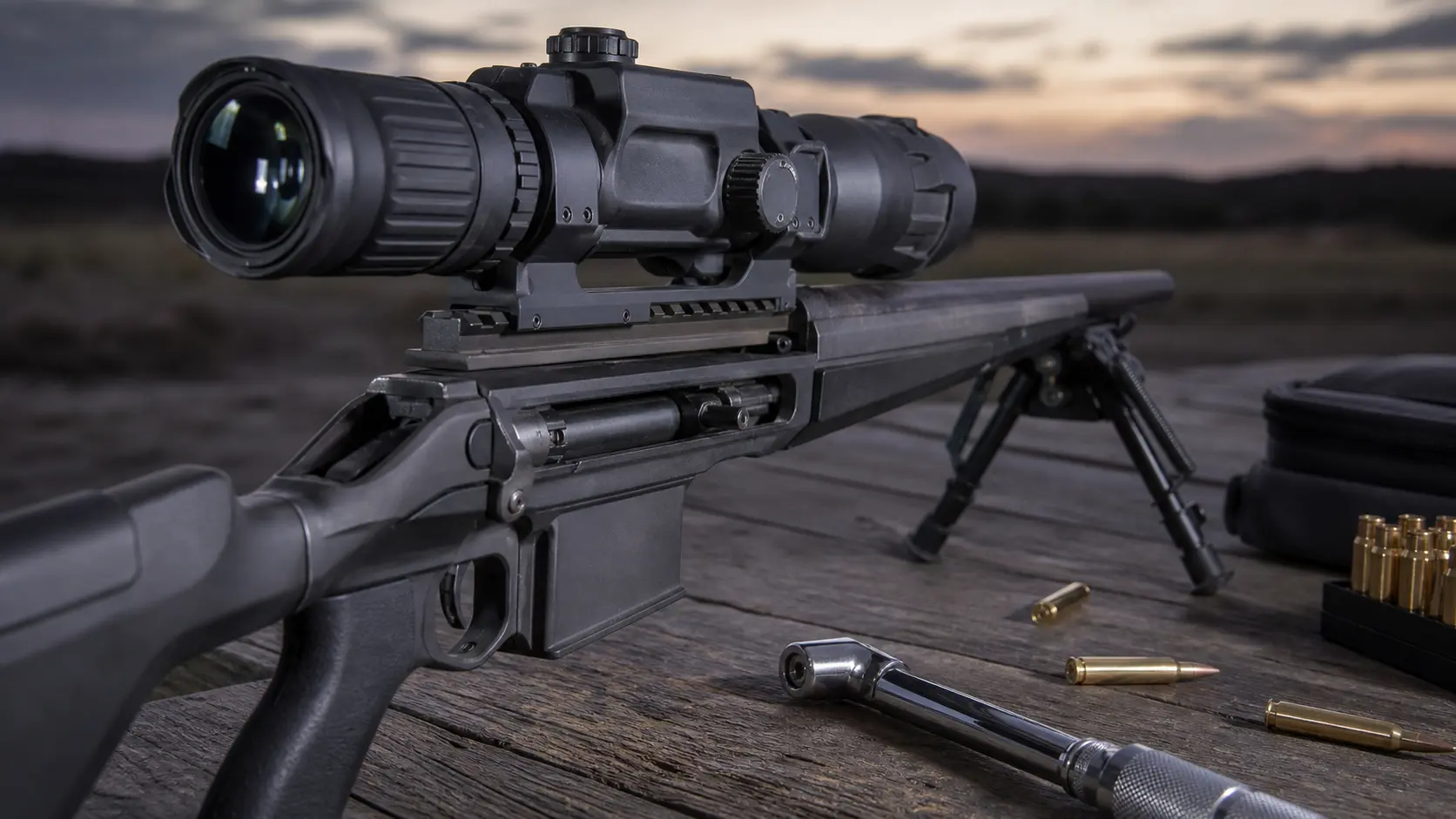
Thermal Scope Recoil Rating Explained: Caliber Compatibility, Zero Retention, and Hunting Durability
After you’ve spent real money, one of those specs that matters most is the thermal scope recoil rating. A hunter sticks a thermal on an AR-10, slug gun, or light bolt rifle, lines it up, and then asks himself if it’s designed for that recoil.
The best time to ask is before it’s mounted.
A recoil proof thermal scope is more than just a rugged case. The optic contains electronics, display elements, a sensor assembly, battery contacts, controls and an inbuilt zero system. All of it can be stressed by recoil.
Thermal scope caliber compatibility is explained in real world hunting terms – will this thermal scope survive my rifle and hold zero in the field?
Quick Answer: What Recoil Rating Should a Thermal Scope Have?
The appropriate recoil rating for a right thermal scope is dependent on the rifle, load, rifle weight, mount quality and round count.
Most of the thermal rifle scopes on the market are acceptable for use on AR-15, .223 Remington and 5.56 NATO systems as long as they are installed properly and operated within the manufacturer’s guidelines.
Check the actual recoil rating and warranty conditions for .308, AR-10 and 6.5 Creedmoor rifles.
If using a .30-06, .300 Win Mag, .338-class rifle or other heavy-recoil type of gun, don’t assume compatibility. Check the stated recoil limit of the model first.
Furthermore, the term "shockproof" isn’t sufficient. A thermal scope shockproof rating only works if the manufacturer has outlined what it is and how to use it.
What Does Thermal Scope Recoil Rating Mean?
Thermal scope recoil rating is the amount of recoil or shock that the optic can handle. The confusing thing about all of this is that brands don’t all refer to it the same way.
Some brands employ caliber terms like ".308 rated" or ".375 H&H rated." Others employ a G-force claim, like a 1000g recoil rating. Others employ an energy-type claim, like a 6000 joule recoil rating. Some even say recoil resistant or shockproof.
Don’t equate those standards with each other. The .308 rating, the 1000g recoil rating, the 6000 joule rating, and the wide-ranging "shockproof" claim could refer to different tests and/or be offered under different warranty conditions.
Caliber Rating vs G-Rating vs Joule Rating
Caliber rating is simple but can be misleading about the rifle. This is because a heavy load on a lightweight .308 can prove to be as damaging on an optic as a lighter load on a heavier .308.
Shock acceleration is described by a G rating, but this does not necessarily indicate direction, duration or repeated-cycle testing. A joule rating can refer to recoil energy, but additional context is required.
Why Recoil Is Hard on Thermal Optics
Thermal optics are electronic sighting systems. Recoil can affect battery contacts, display connections, lens assemblies, controls, mounting interfaces, and digital zero systems.
Hence, when considering thermal rifle scope durability, it should be evaluated as a whole rifle system, not just a product page number.
Why "Rated for .308" Is Not the Whole Story
When a scope is rated to .308, that’s a good piece of information. It is not a blank check.
In real-world scenarios, there are factors that influence the stress, such as rifle weight, ammunition type, quality of the rail, mount construction, suppressor usage, and removal/reinstallation.
Thermal Scope Caliber Compatibility by Rifle Type
The caliber compatibility of thermal scope should only be based on the actual weapon and not only on the cartridge name.
AR-15 and .223 / 5.56 Setups
The easiest recoil match is a thermal scope for use with AR-15. Standard .223 and 5.56 hunting rifles are not as intense as .308, 12 gauge slugs or magnum bolt rifles.
Nevertheless, the mount must be set in place properly, fasteners must be torqued, and “zero” should be verified using the hunting load. When looking for an AR optic, refer to USA Night Vision’s review of the best thermal scopes for AR-15.
AR-10, .308, and 6.5 Creedmoor
For hog and predator hunting, 6.5 Creedmoor and .308 Winchester are popular rifle choices; rifle weight and load choice vary.
Avoid taking anything from the forums for granted. Check official model documentation and warranty terms. If the rifle is light, round count is high or the optic will be shared, an additional margin is required for a thermal scope for .308.
Bolt-Action Hunting Rifles
Bolt guns cover a wide range: .243, .270, 6.5 Creedmoor, .308, .30-06, and heavier. Be sure to check the rail, base screws, rings and the eye relief.
Optics with greater weight and size impact handling. Those trade-offs are described by USA Night Vision’s thermal scope lens size guide.
12 Gauge and Slug Guns
A thermal scope for use with 12 gauge requires special verification. Light field loads and heavy slug loads are not the same. Ask before mounting if there is not sufficient support.
Magnum Calibers and Heavy Recoil Rifles
If you’re firing .300 Win Mag, .338 class rifles, or anything else with a high recoil, don’t take any chances. The best thermal scope for heavy recoil is the model which is clearly supported for this recoil.
Recoil Rating and Zero Retention Are Related, But Not the Same
Thermal scope zero retention is the retention of point of impact after recoil, transport, removal and field use.
A Scope Can Survive Recoil and Still Lose Zero
A thermal scope can turn on and provide a clear image, and still cause to shift point of impact. The cause could be the optic, mount, rail, screws, QD lever, rifle profile, ammunition or installation.
When a thermal scope holds zero, the whole rifle system is working.
Mounts, Rails, Rings, and QD Levers Matter
The mounting and recoil of the scope to the scope mount is connected with the thermal scope. Make sure the mount is seated all the way in the rail slot, use a stable receiver rail, refer to torque specs, and verify QD lever tension. If the optic is removed, reinstall it to the same location and check zero before hunting.
USA Night Vision’s thermal scope mounting guide covers that setup in more detail.
Digital Zero Profiles Can Hide Mechanical Problems
Digital zero profiles are helpful, but can muddy the waters during troubleshooting. It can be a rifle profile error, ammo profile error, loose mount, rail shifting, or inconsistent QD position.
Check the profile, ammo, mount, rail and zero process before faulting the sensor or firmware. Refer to the guide to thermal scope reticles and zeroing.
How to Check Whether a Thermal Scope Is Safe for Your Rifle
Ensure the rifle is unloaded, the chamber is clear and ammunition is not in/on the work area before mounting, inspection, or adjustment.
Step 1: Read the Manufacturer’s Recoil Rating
Always begin with the exact model, and not just the brand. Check for official documentation, caliber limits, recoil rating, mount notes and exclusions.
Step 2: Match Rating to Rifle, Load, and Use
Match the rating to the actual rifle and load. High round count, magnum recoil, suppressor use, and shared optics should push you toward more conservative choices.
Step 3: Check Warranty Language
Thermal scope warranty recoil damage can be complicated. Coverage may differ for unsupported calibers, unauthorized mounts, misuse, impact damage, or disassembly.
Step 4: Confirm Mount Compatibility
Direct Picatinny mounts, rings, proprietary mounts, and clip-ons should not be treated the same. Clip-ons may have different assumptions than dedicated rifle scopes. USA Night Vision explains this in the guide to thermal clip-on vs dedicated thermal scope.
Step 5: Live-Fire and Document Zero
Mount and fire the confirmation group using the hunting load. Mark screws, note the rail slot, save the rifle/ammo profile and zero after heavy use.
When using external power, plan for cables to be laid out so that recoil does not pull on ports. Check out USA Night Vision’s thermal scope battery life guide for long hunts.
Common Recoil Rating Mistakes Hunters Make
Assuming All Thermal Scopes Are Rifle-Rated
Never attach a scanner, clip-on or observation device to a rifle without the manufacturer’s endorsement.
Confusing Waterproof or Rugged Claims With Recoil Rating
Waterproof, rugged and shockproof do not equal a defined rifle recoil rating.
Mounting Across an Unstable Rail Section
Avoid loose bases, questionable rail sections, or setups that bridge moving parts.
Using a Scope on a Heavier Caliber Than the Warranty Allows
Do not presume recoil damage will be covered if the warranty does not include it for the caliber.
Blaming the Thermal Sensor Before Checking Mount and Zero
When the point of impact changes, check the mount, rail, screws, QD tension, profile, and ammo.
Recoil Rating by Hunting Scenario
| Scenario | Typical Rifle / Caliber | Recoil Concern | What to Check | Internal Link |
|---|---|---|---|---|
| AR-15 predator hunting | AR-15, .223, 5.56 | Usually mild, but mount movement can shift zero | Rail slot, torque, zero confirmation | Best thermal scopes for AR-15 |
| AR-10 hog hunting | AR-10, .308, 6.5 Creedmoor | Higher recoil and model uncertainty | Official recoil rating, warranty, QD tension | Best thermal scopes for hog hunting |
| Bolt-action predator rifle | .243, .270, 6.5 Creedmoor, .308, .30-06 | Rifle weight and loads vary | Base, rings, eye relief, zero profile | Best thermal scopes for coyote hunting |
| 12 gauge night setup | 12 gauge slug gun | Heavy slug loads can be rough | Exact model rating and load context | Thermal scope mounting guide |
| Magnum ranch rifle | .300 Win Mag, .338 class | High recoil can exceed assumptions | Manufacturer support before mounting | Detection vs recognition vs identification |
| Shared optic | Multiple rifles | Repeatability and profile mistakes | Same rail slot, saved profiles, live-fire checks | Thermal scope reticle and zeroing |
Buying Advice: How Conservative Should You Be?
Be conservative if you’re shooting .308 and heavier, shooting with a light rifle, shooting a lot of shots, using a QD mount, shooting between rifles, or hunting a really rough ranch shot. Additional recoil cushion is less expensive than a broken optic.
Choose More Recoil Margin If…
- You shoot .308, .30-06, 12 gauge slugs, .300 Win Mag, or heavier.
- Your rifle is light for the cartridge.
- You shoot high round counts.
- One optic is exchanged between rifles.
- You rely on QD mounts.
- You hunt from vehicles, gates, blinds, or tripods.
When a Standard Thermal Scope Is Usually Enough
Lower recoil hunting with AR-15, .223, and 5.56 calibers typically only requires a standard thermal rifle scope, properly set up and zeroed, to be effective. Know, do not guess.
Field Checklist Before You Hunt
- Recoil rating from the manufacturer verified for this model number.
- Warranty terms checked
- Rifle is unloaded prior to mounting, inspection and adjustment.
- Mount installed on stable receiver rail
- Torque specs followed
- Screws witness-marked
- Same rail slot used after removal
- Correct rifle and ammo zero profile selected
- Thermal target used for live-fire confirmation
- Zero rechecked after transport or hard use
Final Takeaway
Thermal scope recoil rating is a buying filter, not a guarantee by itself. It helps you rule out bad matches, but it does not replace a stable mount, correct torque, documented zero, proper rifle profile, and realistic expectations.
When it comes to hunting AR-15, it can be simple. For .308, AR-10, 6.5 Creedmoor, 12 gauge, .30-06, .300 Win Mag, and heavier rifles, verify the model before mounting.
The most secure configuration is a correctly rated optic, a stable mount, a known zero and a hunter who checks all the details before the rifle ever enters the field.
FAQ
Can a thermal scope handle .308 recoil?
Some can, but consult the documentation of the precise model. Assume the ruggedness of a thermal scope for .308 use does not apply to all of them.
Is an AR-10 too much recoil for a thermal scope?
Not automatically, but do not guess. Check the stated recoil limit, mount instructions, and warranty terms.
What does 1000g recoil rating mean on a thermal scope?
A 1000g recoil rating usually applies to the shock acceleration tolerance, but has a varying meaning depending on the test method and warranty conditions used by the manufacturer.
Is a .308 rated thermal scope safe on .300 Win Mag?
Not automatically. A .308 rated thermal scope is not considered safe to be used on .300 Win Mag unless the manufacturer has listed that recoil level on that particular model.
Can a thermal scope lose zero from recoil?
Yes. The cause of a thermal scope losing zero on recoil can be the optic, mount, rail, screws, QD lever, rifle profile, ammo change, or installation.
Does a QD mount affect thermal scope zero retention?
It can. A good QD mount can be repeatable, but only when adjusted correctly, returned to the same rail slot, and used on a stable rail.
Are thermal clip-ons rated differently than dedicated thermal scopes?
They can be. There may be different mounts and recoil assumptions for clip-ons and dedicated thermal rifle scopes, as well as differences in instructions for use. Review the model documentation.

Can You Use a Thermal Scope During the Day? Daylight Use/Sun Safety and Zeroing Tips.

Night Vision Range Explained: Detection, Recognition, Identification, and Real Hunting Distance

How to Set Up an IR Illuminator for Night Vision: Placement, Beam Width, and Field Mistakes